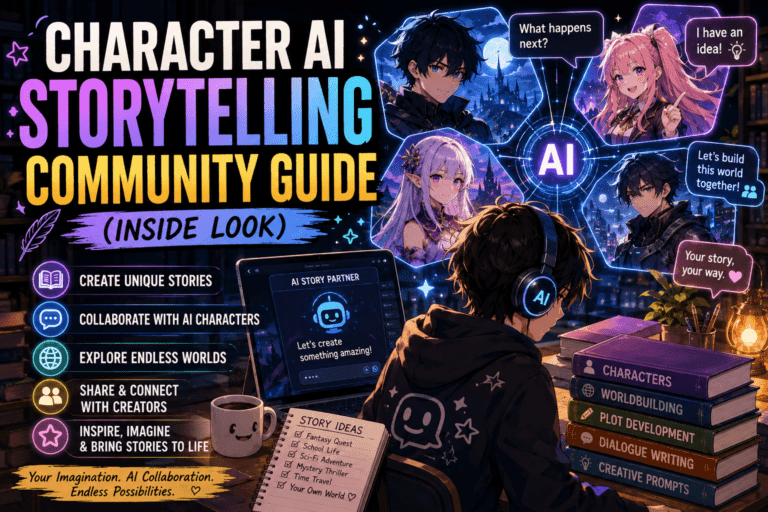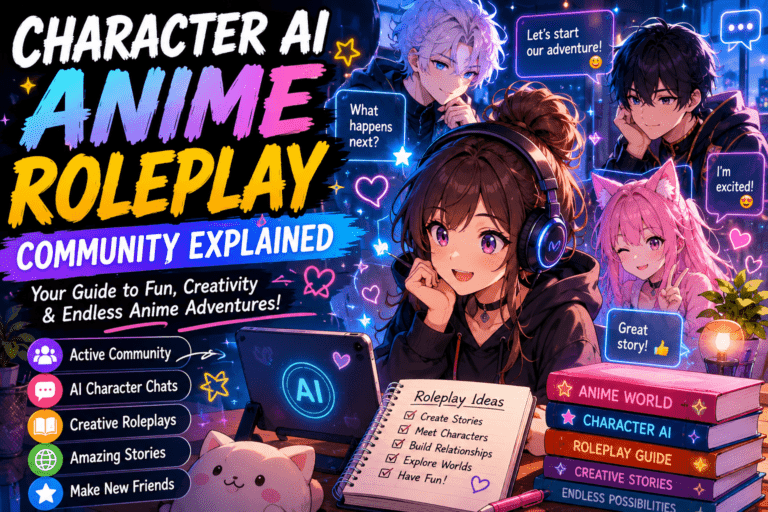

Writing has always been a strange mix of creativity, discipline, and occasional suffering. For centuries, writers relied on notebooks, typewriters, and caffeine-fueled determination. Now, they have something else: Character AI.
Instead of staring at a blinking cursor while questioning life choices, writers can now interact with AI-powered personalities that respond, suggest, challenge, and collaborate. Character AI has quickly become a powerful tool for writers across genres—from novelists and screenwriters to bloggers and hobbyists.
This guide explores how writers use Character AI in real-world workflows, the benefits it offers, its limitations, and how to use it effectively without losing your own creative voice.
What Is Character AI?
Character AI is a conversational AI platform that allows users to interact with bots designed with specific personalities. These bots can act as fictional characters, editors, mentors, or entirely custom personas.
For writers, this means you’re no longer working alone. You’re effectively collaborating with a digital partner that can simulate dialogue, generate ideas, and help refine your work.
Why Writers Are Turning to Character AI
Writers use Character AI because it transforms writing from a solitary activity into an interactive process.
Key Advantages
Immediate Feedback
Instead of waiting for beta readers or editors, writers get instant responses.
Creative Stimulation
AI introduces unexpected ideas that can spark new directions.
Reduced Writer’s Block
When you’re stuck, AI keeps the momentum going.
Flexible Collaboration
You can switch between different “voices” and perspectives instantly.
Common Ways Writers Use Character AI
Brainstorming Story Ideas
One of the most common uses is idea generation.
Writers can:
- Ask for plot concepts
- Explore “what if” scenarios
- Generate unique story premises
Unlike static lists, Character AI allows dynamic brainstorming where ideas evolve through conversation.
Developing Characters
Writers often struggle to make characters feel real. Character AI helps by allowing you to interact directly with your characters.
You can:
- Ask characters about their motivations
- Test how they react in situations
- Refine their personality and voice
This turns character development into an interactive experience rather than a theoretical exercise.
Writing Dialogue
Dialogue is one of the strongest areas where Character AI shines.
Writers use it to:
- Simulate conversations
- Test tone and pacing
- Improve realism
Instead of guessing how a character might respond, you can see it play out instantly.
Building Scenes
Character AI can help construct scenes by suggesting:
- Descriptions
- Emotional beats
- Conflict progression
Writers can iterate quickly, refining scenes step by step.
Overcoming Writer’s Block
When the story stalls, Character AI can push it forward.
You can:
- Ask “what happens next?”
- Explore alternate plot paths
- Introduce new conflicts
It’s like having a brainstorming partner who never runs out of suggestions.
Editing and Refinement
While not a full replacement for professional editing, Character AI can:
- Rephrase sentences
- Improve clarity
- Suggest improvements
It works best as a first-pass editor.
Real-World Writing Workflows
Workflow 1: Idea to Outline
- Start with a rough concept
- Use AI to expand it into a plot
- Refine structure and pacing
Workflow 2: Character-Driven Writing
- Create a character bot
- Interact with it to explore personality
- Use insights to write scenes
Workflow 3: Dialogue Testing
- Write a scene draft
- Simulate conversation with AI
- Adjust tone and realism
Workflow 4: Iterative Drafting
- Write a section
- Get AI feedback
- Revise and continue
Best Practices for Writers
- Be specific with prompts
- Provide context
- Guide the AI actively
- Edit everything carefully
- Use AI as support, not replacement
Common Mistakes Writers Make
- Over-relying on AI
- Using vague prompts
- Skipping editing
- Losing personal voice
Limitations of Character AI
- Limited memory
- Occasional repetition
- Inconsistent tone
- Lack of true creativity
AI is a tool, not a storyteller.
Ethical Considerations
Writers should consider:
- Originality
- Proper attribution
- Responsible use of AI-generated content
The Future of Writing with AI
We are moving toward:
- Smarter AI collaboration
- Better memory systems
- More personalized writing assistants
The relationship between writers and AI will continue to evolve.
Conclusion
Character AI is changing how writers approach storytelling. It offers new ways to brainstorm, develop characters, and refine ideas.
Used correctly, it enhances creativity without replacing it.
The blank page is still yours—but now, it talks back.
FAQs
How do writers use Character AI?
Writers use Character AI for brainstorming ideas, developing characters, writing dialogue, and refining story structure.
Is Character AI useful for professional writers?
Yes, many professional writers use it as a creative assistant, though final editing and originality remain human responsibilities.
Can Character AI help with writer’s block?
Yes, it can generate ideas, suggest plot directions, and keep the writing process moving.
Does using Character AI affect originality?
It can if overused, which is why writers should always edit and personalize AI-generated content.
Is Character AI suitable for beginners in writing?
Yes, it’s a helpful tool for learning storytelling, structure, and dialogue.