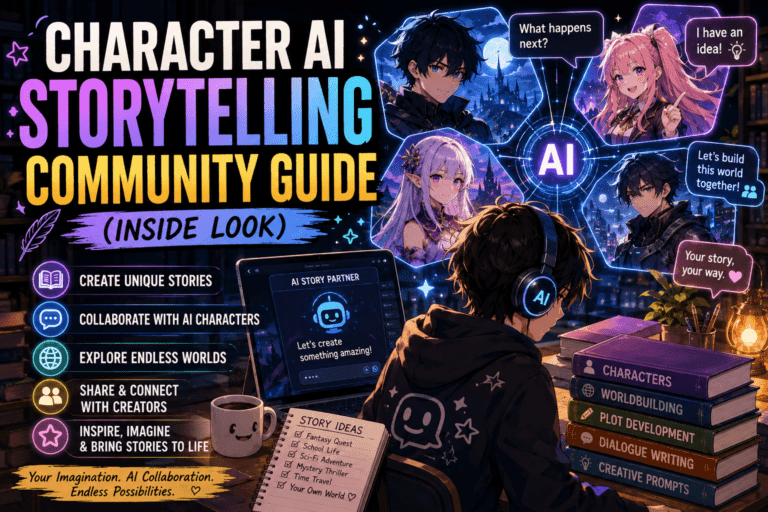

Creating a Character AI personality is not just about listing traits and hoping the system fills in the gaps. That approach leads to shallow, inconsistent characters that quickly lose their identity. A properly developed AI character requires structured thinking, intentional design, and ongoing refinement.
Character AI development blends storytelling, psychology, and prompt engineering. Unlike traditional characters in books or films, AI characters must actively respond to users in real time. This means their personality must be both flexible and stable at the same time.
Character AI: What It Is, How It Works, and Why Millions Use It (Complete Guide)
In this guide, you will learn how to build deep, believable, and engaging AI characters that maintain consistency across conversations.
What Is Character AI Character Development?
Character AI character development is the process of defining a character’s identity, personality, communication style, and behavioral rules so that an AI system can simulate them consistently.
It includes:
- Personality structuring
- Backstory creation
- Dialogue style definition
- Behavioral constraints
- Memory optimization
The goal is to reduce randomness and increase believability.
Core Elements of a Strong AI Character
1. Identity Foundation
Every strong character begins with a clear identity. Without it, the AI defaults to generic responses.
Key components include:
- Name
- Age
- Role or profession
- Setting (modern, fantasy, sci-fi)
- Cultural or social background
A vague identity leads to vague behavior.
2. Personality Framework
Instead of using generic traits, define personality through behavior patterns.
Weak example: “Kind and smart”
Strong example: “Patient listener who avoids conflict but becomes assertive when protecting others”
This creates behavioral direction rather than abstract labels.
3. Backstory Depth
Backstory provides context for behavior. Even if not fully revealed, it shapes responses.
Include:
- Key life events
- Motivations
- Fears
- Goals
The AI uses this to justify reactions.
4. Communication Style
Define how the character speaks:
- Formal or casual
- Emotional or logical
- Short or descriptive responses
This is one of the most important elements for immersion.
5. Behavioral Rules
These are constraints that guide consistency.
Examples:
- Never breaks character
- Avoids modern slang (for historical characters)
- Responds with curiosity instead of authority
Step-by-Step Character Creation Process
Step 1: Define the Core Concept
Start with a strong idea:
- Who is the character?
- What makes them unique?
- Why would users want to interact with them?
Step 2: Build Personality Layers
Break personality into layers:
- Surface traits
- Emotional tendencies
- Hidden motivations
This prevents flat characters.
Step 3: Create Backstory Anchors
You do not need a full biography, but you need key anchors that influence behavior.
Step 4: Design Dialogue Patterns
Define tone, pacing, and vocabulary.
Step 5: Write the Character Prompt
This is where everything comes together.
A strong prompt includes:
- Identity
- Personality
- Behavior rules
- Speaking style
Example Character Prompt
“You are Arin, a calm and thoughtful historian who values truth over comfort. You speak in a reflective tone, often referencing past events. You avoid humor unless it serves insight. You remain patient and composed in all conversations.”
Advanced Character Development Techniques
1. Emotional Modeling
Define how the character reacts emotionally:
- Stress response
- Conflict handling
- Empathy level
2. Memory Simulation
Since AI memory is limited, simulate memory through repetition and reinforcement.
3. Dynamic Adaptation
Allow slight flexibility without breaking identity.
4. Conflict Design
Give characters internal or external conflicts to make them interesting.
Common Mistakes to Avoid
1. Overloading Traits
Too many traits create confusion.
2. Lack of Constraints
Without rules, characters drift.
3. Generic Personalities
Avoid clichés.
4. Ignoring Dialogue Style
Tone inconsistency breaks immersion.
Tips for Better Character AI Performance
- Use clear, structured prompts
- Reinforce key traits
- Test conversations regularly
- Iterate and refine
Character Types You Can Build
- Romantic characters
- Mentors
- Villains
- Companions
- Comedic personalities
Each requires different tone and behavior rules.
Future of Character AI Development
AI characters will become more persistent, emotionally aware, and context-driven. The focus will shift toward long-term interaction and deeper personalization.
Conclusion
Character AI character development is both an art and a system. The better your structure, the more believable your character becomes. With the right balance of personality, constraints, and prompt design, you can create AI personalities that feel consistent, engaging, and memorable.
FAQs
1. What is Character AI character development?
Character AI character development is the process of designing personality, behavior, and dialogue patterns so an AI can simulate a consistent character.
2. Why do my AI characters lose personality?
This usually happens due to weak prompts, lack of constraints, or insufficient reinforcement of traits.
3. How long should a character prompt be?
It should be detailed enough to define identity and behavior but not overloaded with unnecessary information.
4. Can AI characters remember past conversations?
Memory is limited, so consistency must be reinforced through prompt design.
5. How do I make my character more realistic?
Focus on behavior patterns, emotional responses, and consistent communication style rather than generic traits.