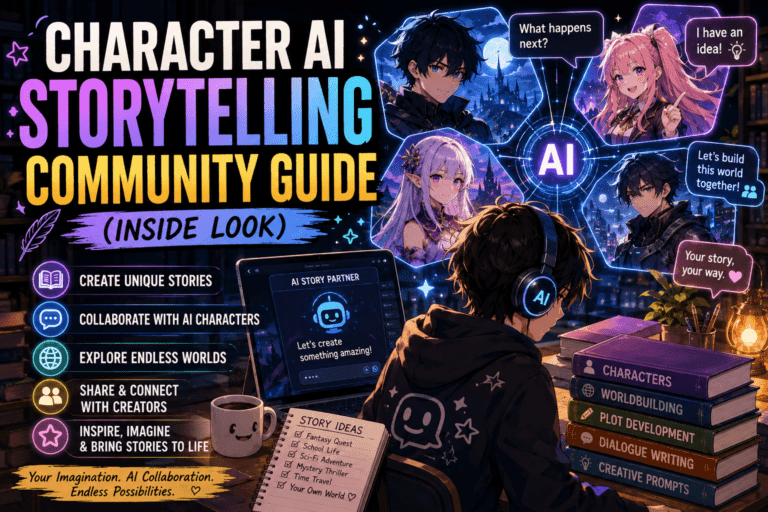


Prompt engineering sounds like a fancy term for “telling AI what to do.”
And technically, that’s true.
But in practice, it’s the difference between getting generic, repetitive responses… and creating highly controlled, immersive, and intelligent interactions that actually feel intentional.
Most users treat prompts like casual instructions. They type a sentence, hope for the best, and then wonder why the output feels inconsistent or shallow.
Character AI: What It Is, How It Works, and Why Millions Use It (Complete Guide)
The reality is simple: AI performs exactly as well as the instructions you give it.
Weak prompts → weak results.
Strong prompts → surprisingly powerful outcomes.
This guide breaks down how to engineer prompts that improve quality, consistency, engagement, and control in Character AI.
What Is Prompt Engineering?
Prompt engineering is the process of designing structured inputs that guide AI behavior and output.
It involves:
- Clarity
- Structure
- Context
- Constraints
- Intent
Instead of “asking,” you are “designing responses.”
Why Prompt Engineering Matters
Better Output Quality
Clear prompts reduce vague responses.
More Control
You guide tone, style, and behavior.
Consistency
Structured prompts reduce randomness.
Efficiency
Less trial and error.
Core Principles of Effective Prompts
1. Clarity Over Complexity
Avoid vague instructions.
Instead of:
“Be interesting”
Use:
“Respond with short, witty sentences and subtle sarcasm.”
2. Specificity
Define exactly what you want.
3. Context
Provide background information.
4. Constraints
Limit output intentionally.
5. Structure
Organize prompts logically.
Types of Prompts in Character AI
Instructional Prompts
Tell the AI what to do.
Role-Based Prompts
Define character identity.
Contextual Prompts
Provide scenario details.
Constraint Prompts
Limit behavior or output.
Dynamic Prompts
Evolve during conversation.
Prompt Structures That Work
The 4-Part Prompt Framework
- Role
- Context
- Task
- Constraints
Example:
“You are a sarcastic detective. We are investigating a mysterious case. Respond with short, sharp observations. Avoid long explanations.”
The Layered Prompt Model
- Base instruction
- Behavioral rules
- Tone control
- Output constraints
Advanced Prompt Engineering Techniques
Prompt Chaining
Break complex tasks into steps.
Iterative Prompting
Refine prompts based on output.
Conditional Prompts
“If X happens, respond with Y.”
Multi-Turn Prompting
Guide responses across multiple messages.
Controlling Tone and Style
Tone Control
Define emotional direction.
Style Control
Define language patterns.
Voice Consistency
Maintain personality across responses.
Using Constraints Effectively
Examples:
- “Use one sentence only”
- “Avoid repeating phrases”
- “Stay in character at all times”
Constraints improve focus.
Improving Response Quality
Add Context
More relevant information improves output.
Reduce Ambiguity
Be precise.
Use Examples
Demonstrate desired output.
Common Prompt Engineering Mistakes
- Vague instructions
- Overloading prompts
- Conflicting rules
- Ignoring context
Prompt Templates for Character AI
Basic Template
Role:
Context:
Task:
Constraints:
Advanced Template
Character Identity:
Scenario:
Objective:
Tone:
Style:
Rules:
Constraints:
Prompt Optimization Process
- Write initial prompt
- Test output
- Identify issues
- Refine prompt
- Repeat
Measuring Prompt Effectiveness
Evaluate:
- Relevance
- Consistency
- Engagement
- Accuracy
Future of Prompt Engineering
Prompt engineering will evolve with AI improvements, but structured thinking will remain essential.
Conclusion
Prompt engineering is the foundation of effective Character AI use. With clear structure, constraints, and intent, you can transform average interactions into highly controlled and engaging experiences.
FAQs
1. What is prompt engineering?
Designing inputs to guide AI output.
2. Why are my prompts not working?
They may be too vague or unclear.
3. How do I improve prompts?
Add structure and specificity.
4. Can prompts control AI behavior?
Yes, significantly.
5. Is prompt engineering difficult?
It improves with practice.