
AI Roleplay Communities
The digital world doesn’t sit still. It mutates, evolves, and occasionally decides that humans aren’t dramatic enough on their own, so it invents AI characters to help. That’s where AI roleplay communities come in.
These communities are rapidly transforming how people interact online. What used to be forum-based storytelling between humans has evolved into dynamic, AI-driven conversations that feel responsive, immersive, and—sometimes uncomfortably—real.
Character AI: What It Is, How It Works, and Why Millions Use It (Complete Guide)
AI roleplay communities are platforms where users interact with artificial intelligence to create stories, simulate relationships, or explore fictional worlds. The key difference from traditional roleplay is simple: the AI does the heavy lifting. It responds instantly, adapts to your input, and keeps the story alive without needing another human to stay awake in your timezone.
This shift isn’t just technological. It’s cultural.
What Is AI Roleplay?
AI roleplay is interactive storytelling powered by artificial intelligence. Users engage with AI-generated characters that can represent:
- Fictional personalities
- Historical figures
- Custom-created characters
- Companions designed for emotional interaction
The AI responds using natural language, adapting tone, memory, and context to create a continuous narrative. It doesn’t just reply. It evolves.
Instead of waiting for someone to respond in a forum thread, you get instant dialogue. No ghosting. No delays. Just a machine that never gets tired of your plot twists.
Evolution of Online Roleplaying
Roleplaying has been around long before AI showed up to steal the spotlight.
Phase 1: Traditional Roleplay
- Tabletop games like Dungeons & Dragons
- Forum-based storytelling
- Chatroom interactions
These required human collaboration, scheduling, and patience. Lots of patience.
Phase 2: Digital Expansion
- MMORPGs
- Multiplayer storytelling platforms
- Structured roleplay communities
More accessible, but still dependent on other people.
Phase 3: AI Integration
- Instant character generation
- Always-available interactions
- Dynamic storytelling
AI removed the biggest limitation: reliance on other humans. Convenient? Yes. Slightly existential? Also yes.
The Technology Behind AI Roleplay
Underneath all the “this feels real” magic is a stack of very real technology.
Natural Language Processing (NLP)
NLP allows AI to understand human language, including context, tone, and intent. It’s why conversations don’t feel like you’re arguing with a broken chatbot from 2009.
Machine Learning and Personalization
AI systems learn from interactions. Over time, they:
- Adapt to your tone
- Remember preferences
- Adjust responses based on history
This creates a personalized experience that feels tailored—because it is.
Generative AI Models
These models generate dialogue, scenarios, and narratives. They’re trained on massive datasets, allowing them to produce:
- Realistic conversations
- Creative storylines
- Emotionally engaging responses
Basically, they improvise better than most people on a bad day.
Why AI Roleplay Communities Are Growing
This isn’t a random trend. There are clear reasons behind the explosion.
Accessibility and Ease of Use
No learning curve. No coordination. You type, it responds. That’s it.
Emotional Engagement
AI can simulate empathy, humor, and emotional nuance. Even when you know it’s artificial, the interaction can still feel meaningful.
Humans are weird like that.
Creative Freedom
No restrictions. No judgment. You can build any world, character, or storyline you want.
No one interrupts your story with “that’s unrealistic.” The AI just goes with it.
Popular Platforms Driving AI Roleplay
AI roleplay exists across multiple ecosystems:
Chat-Based Platforms
- Focus on conversation
- Character customization
- Instant interaction
Gaming and Virtual Worlds
- AI-driven NPCs
- Dynamic storytelling
- Player-driven narratives
The line between game and conversation is starting to blur.
Types of AI Roleplay Communities
Not all roleplay communities are the same. People use them for very different reasons.
Fantasy and Fiction-Based Roleplay
- Magic worlds
- Sci-fi universes
- Alternate realities
Relationship and Companion AI
- Emotional interaction
- Simulated friendships or romance
- Ongoing conversations
Educational Roleplay
- Historical simulations
- Skill-based scenarios
- Learning through interaction
Yes, you can literally debate history with an AI version of a historical figure. No, it won’t get offended.
Benefits of AI Roleplay Communities
Enhancing Creativity
AI acts as a creative partner. It helps:
- Generate ideas
- Expand storylines
- Overcome writer’s block
Writers love it. Purists pretend they don’t.
Mental Health and Emotional Support
Some users find comfort in AI interactions. It can:
- Reduce loneliness
- Provide a safe space to talk
- Simulate understanding
It’s not therapy, but it can feel supportive.
Skill Development
Users improve:
- Writing skills
- Communication
- Problem-solving
All while pretending they’re just “messing around.”
Challenges and Ethical Concerns
Of course, nothing this powerful comes without issues.
Privacy and Data Security
AI systems often store conversations. That raises questions:
- Who owns the data?
- How is it used?
- Is it secure?
Spoiler: always read the terms. Nobody does.
Addiction and Overdependence
AI is always available. That’s convenient—and dangerous.
Some users may:
- Spend excessive time interacting
- Replace real interactions
- Develop dependency
Balance isn’t optional here. It’s necessary.
Ethical AI Behavior
Developers must ensure AI:
- Avoids harmful content
- Respects boundaries
- Doesn’t reinforce negative biases
Easier said than done.
AI Roleplay vs Traditional Roleplay
| Feature | AI Roleplay | Traditional Roleplay |
|---|---|---|
| Interaction | AI-driven | Human-driven |
| Availability | 24/7 | Limited |
| Flexibility | High | Moderate |
| Emotional Depth | Simulated | Real |
AI wins on convenience. Humans still win on authenticity.
The Psychology Behind AI Roleplay
Human Connection with AI
Humans are wired for connection. Even simulated interaction can trigger emotional responses.
Your brain doesn’t always care that it’s artificial. It just reacts.
Escapism and Identity Exploration
AI roleplay allows users to:
- Explore different identities
- Test behaviors
- Escape reality
It’s safe experimentation without real-world consequences.
The Role of Community in AI Roleplay
Even with AI, humans still gather.
Social Interaction and Collaboration
- Sharing characters
- Co-creating stories
- Community discussions
Moderation and Rules
- Content guidelines
- Safety enforcement
- Platform governance
Because even fictional worlds need rules.
Monetization of AI Roleplay Platforms
Money always finds its way in.
Subscription Models
- Premium features
- Advanced AI capabilities
- Memory and customization upgrades
In-App Purchases
- Custom characters
- Story packs
- Enhanced interaction tools
Creativity, now with a price tag.
Advanced Trends Shaping AI Roleplay Communities
Now things get interesting.
Hyper-Personalized AI Characters
AI is getting better at remembering and adapting.
Features include:
- Long-term memory
- Emotional tone matching
- Personality evolution
Your AI today isn’t exactly the same tomorrow.
Voice and Multimodal Roleplay
Text is just the beginning.
New systems include:
- Voice interaction
- Facial animation
- Visual storytelling
This makes interactions feel closer to real-life communication.
Decentralized AI Communities
Blockchain is creeping in.
Users can:
- Own their characters
- Trade digital assets
- Maintain control over data
Less platform control, more user ownership.
How AI Roleplay Is Changing Online Culture
This isn’t just tech. It’s cultural impact.
Redefining Social Interaction
People interact with AI like they would with humans.
Which raises uncomfortable questions:
- What counts as a real relationship?
- Does emotional authenticity matter if it feels real?
No easy answers.
New Forms of Storytelling
AI roleplay creates:
- Non-linear narratives
- Infinite story possibilities
- Interactive experiences
Every user gets a unique story.
Digital Identity Exploration
Users can:
- Try new personalities
- Explore emotions
- Build confidence
It’s like rehearsal for real life, minus the consequences.
AI Roleplay and the Creator Economy
Users aren’t just participants anymore.
User-Generated AI Characters
Creators build:
- Character personalities
- Story worlds
- Dialogue styles
Then share or sell them.
Earning Opportunities
Monetization includes:
- Premium characters
- Subscription content
- Exclusive storylines
Yes, people are making money off imaginary personalities. Welcome to the future.
Safety Measures and Responsible Use
Growth demands responsibility.
Content Moderation
- AI filters
- Community reporting
- Platform enforcement
User Awareness
- Set time limits
- Avoid dependency
- Understand AI limitations
Transparency
- AI is not human
- Responses are generated
- Emotions are simulated
Important distinction, even if your brain occasionally ignores it.
Global Adoption and Trends
AI roleplay is spreading fast.
Developed Markets
- Advanced tech
- High adoption
- Strong monetization
Emerging Markets
- Rapid growth
- Mobile-first usage
- Increasing accessibility
Turns out, everyone likes talking to something that actually replies.
Integration with Other Technologies
Virtual Reality (VR)
Step inside the story.
Augmented Reality (AR)
Bring characters into the real world.
Wearables
Continuous interaction, anytime.
At some point, logging off might become optional. Slightly concerning.
Real-World Applications
Education
- Historical simulations
- Interactive learning
- Skill training
Therapy and Counseling
- Conversation practice
- Emotional support
- Safe interaction environments
Not a replacement for professionals, but a useful tool.
FAQs About AI Roleplay Communities
1. What are AI roleplay communities?
Platforms where users interact with AI characters to create stories or simulate conversations.
2. Are they safe?
Generally yes, but privacy awareness is important.
3. Can AI replace human roleplay?
Not fully. It complements, not replaces.
4. Why are they popular?
Accessibility, creativity, and instant interaction.
5. Can they be addictive?
Yes, if used excessively.
6. What’s the future?
More immersive, more intelligent, more integrated.
Conclusion
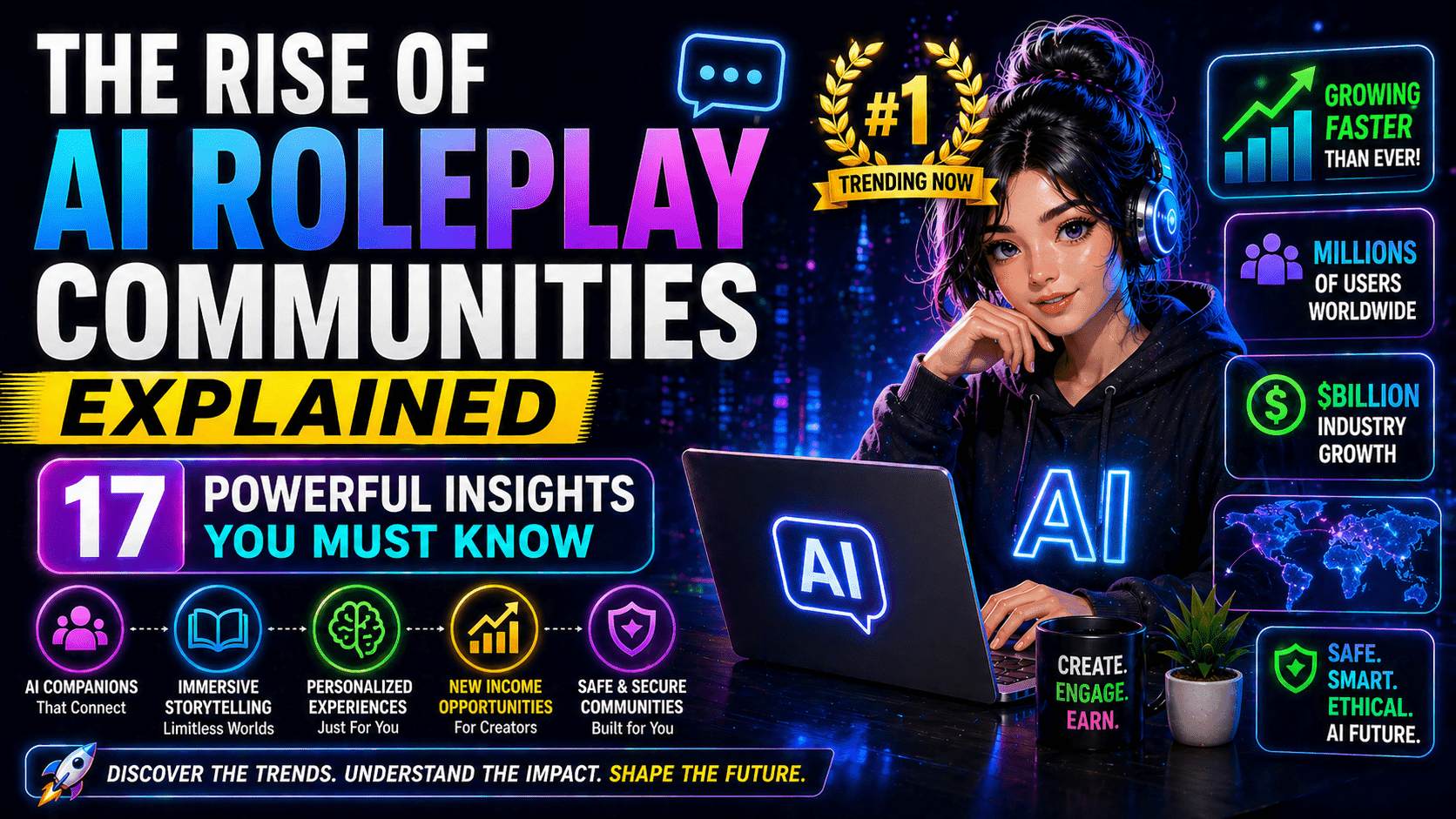
The Rise of AI Roleplay Communities Explained isn’t just a catchy title. It’s a snapshot of a major shift in how humans interact with technology.
These communities are:
- Expanding creativity
- Redefining relationships
- Creating new economic models
At the same time, they raise real concerns about privacy, dependency, and ethics.
Like most powerful tools, the outcome depends on how people use them.
Handled well, AI roleplay can be a creative playground, a learning tool, and even a source of comfort. Handled poorly, it becomes another digital rabbit hole people forget to climb out of.
So yes, it’s impressive. Also slightly unsettling. And absolutely not going away.