
Character AI Fanfiction
Character AI fanfiction has become increasingly popular among writers who enjoy interacting with AI-generated characters and transforming those conversations into compelling stories. Whether you’re inspired by a fictional hero, a fantasy villain, or a custom AI personality, fanfiction offers a creative outlet for expanding existing worlds and exploring new possibilities.
For beginners, writing Character AI fanfiction can feel overwhelming. You may wonder how to capture a character’s personality accurately, build engaging plots, or keep readers interested from beginning to end. Fortunately, with the right techniques and a little practice, anyone can create entertaining and memorable stories.
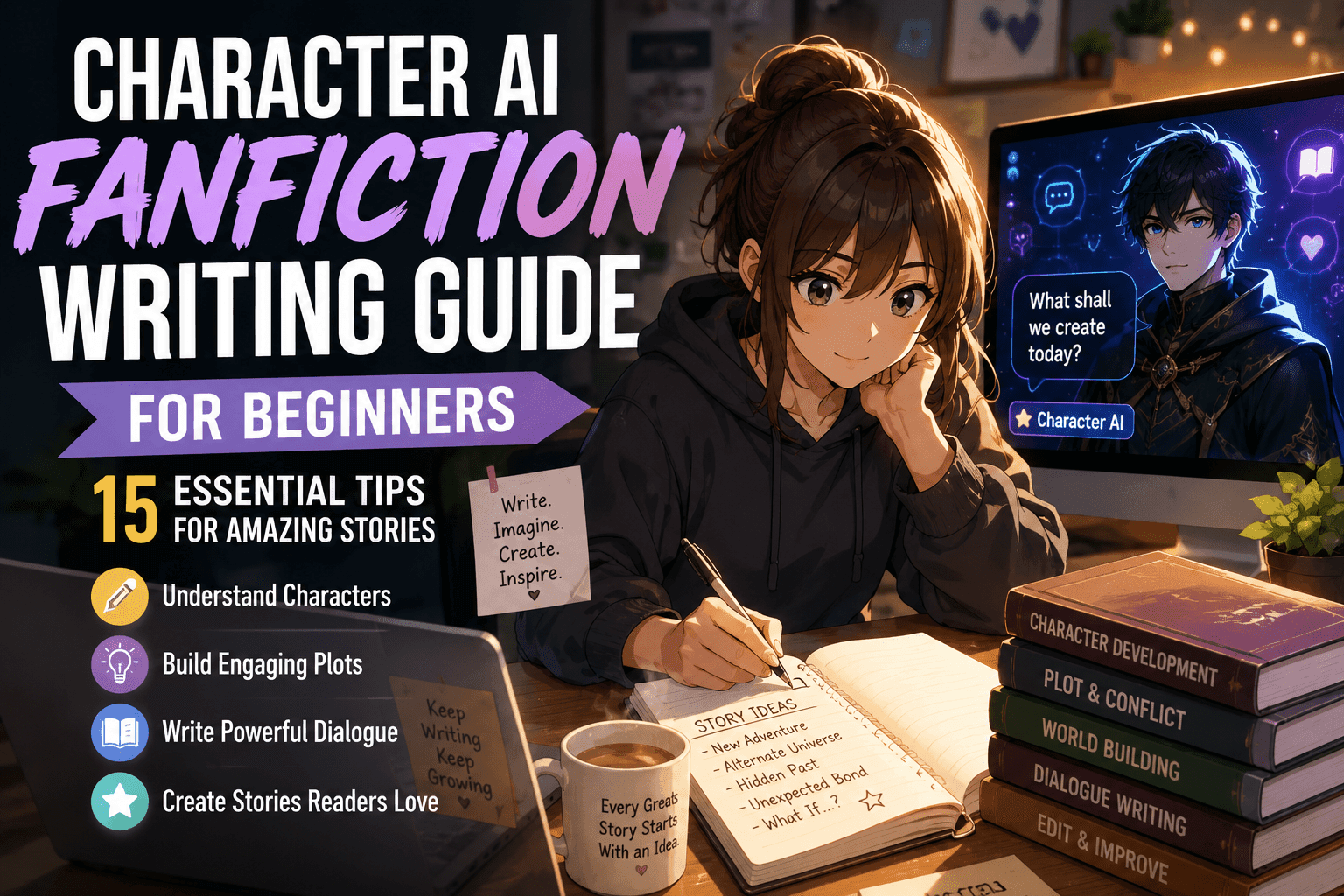
This Character AI Fanfiction Writing Guide for Beginners will help you understand the fundamentals of fanfiction writing and provide practical tips to improve your storytelling skills.
What Makes Character AI Fanfiction Unique?
Unlike traditional fanfiction, Character AI fanfiction often begins with conversations between a user and an AI-generated character. These interactions can inspire story ideas, reveal unexpected character traits, and create scenarios that may not exist in the original source material.
Some unique benefits include:
- Instant character interaction
- Endless story possibilities
- Creative brainstorming assistance
- Opportunities for character exploration
- Enhanced dialogue inspiration
The flexibility of AI-generated conversations allows writers to experiment with alternative timelines, hidden backstories, and imaginative character relationships.
Understanding Fanfiction Basics
Before writing, it’s important to understand what makes fanfiction successful.
Fanfiction is a story that uses characters, settings, or concepts from an existing fictional universe while adding original plots, perspectives, or interpretations.
Popular Fanfiction Genres
Several genres dominate the fanfiction community:
| Genre | Description |
|---|---|
| Romance | Focuses on relationships and emotional development |
| Adventure | Features exciting journeys and challenges |
| Fantasy | Includes magical elements and world-building |
| Mystery | Centers on solving puzzles or crimes |
| Drama | Emphasizes emotional conflicts |
| Alternate Universe (AU) | Places characters in different settings |
Choosing a genre early helps guide your storytelling decisions.
Reader Expectations
Readers generally expect:
- Consistent characterization
- Logical story progression
- Emotional engagement
- Clear dialogue
- Satisfying conclusions
Meeting these expectations increases reader enjoyment and encourages positive feedback.
Choosing the Right AI Character
The character you choose significantly impacts your story.
When selecting an AI character, consider:
- Their personality traits
- Their motivations
- Their strengths and weaknesses
- Their relationships
- Their background
Characters with rich personalities often provide more storytelling opportunities.
Canon vs Original Interpretation
You have two main options:
Canon Characterization
- Closely follows the original source material.
- Appeals to readers seeking authenticity.
Original Interpretation
- Explores alternative behaviors or situations.
- Allows greater creative freedom.
Most successful fanfiction combines elements of both approaches.
Researching Character Personalities
Strong characterization is one of the most important aspects of fanfiction writing.
Spend time studying:
- Speech patterns
- Habits
- Values
- Emotional triggers
- Relationships with other characters
The more familiar you are with a character, the easier it becomes to write believable interactions.
Creating Consistent Character Behavior
Consistency helps maintain immersion.
Ask yourself:
- Would this character realistically say this?
- Does this reaction fit their personality?
- Are their decisions aligned with previous behavior?
Keeping a character profile can help maintain consistency throughout your story.
Building an Engaging Story Concept
A great story starts with a strong idea.
Examples include:
- A character facing an impossible choice
- An alternate ending to a major event
- A hidden secret revealed
- An unexpected friendship
- A journey through a different universe
The best concepts combine familiarity with originality.
Developing Conflict
Conflict drives every story forward.
Types of conflict include:
- Character vs Character
- Character vs Self
- Character vs Society
- Character vs Nature
- Character vs Supernatural Forces
Without conflict, readers have little reason to continue reading.
Establishing Story Goals
Every protagonist should want something.
Examples:
- Saving a friend
- Solving a mystery
- Winning a competition
- Finding acceptance
- Overcoming fear
Clear goals create direction and purpose.
Creating Strong Dialogue
Dialogue is especially important in Character AI fanfiction because many stories originate from conversations.
Good dialogue should:
- Sound natural
- Reflect personality
- Advance the plot
- Reveal emotions
Avoid lengthy conversations that do not contribute to the story.
Mimicking Character Voice
Each character should have a distinct way of speaking.
Consider:
- Vocabulary
- Sentence length
- Humor style
- Emotional expression
A confident warrior speaks differently than a shy student or a mischievous trickster.
Writing Realistic Interactions
Characters should react naturally to events and other people.
To create realistic interactions:
- Understand motivations.
- Consider emotional states.
- Account for previous experiences.
- Maintain relationship dynamics.
Realistic reactions make stories more believable and emotionally impactful.
Developing Emotional Depth
Readers connect with emotions more than events.
Show emotions through:
- Actions
- Body language
- Internal thoughts
- Dialogue
Instead of writing:
“She was nervous.”
Try:
“Her fingers trembled as she reached for the door handle.”
This creates a stronger emotional connection.
Character Growth and Arcs
Great stories often involve change.
A character arc may involve:
- Learning a lesson
- Overcoming a flaw
- Gaining confidence
- Forgiving someone
- Accepting responsibility
Growth gives the story meaning and satisfaction.
Structuring Your Fanfiction
A simple structure works well for beginners.
Beginning
Introduce:
- Main characters
- Setting
- Initial conflict
Middle
Develop:
- Challenges
- Relationships
- Character growth
End
Resolve:
- Main conflict
- Character arcs
- Key story questions
This structure keeps your narrative organized and easy to follow.
Common Beginner Mistakes
Many new writers struggle with similar issues.
Avoid:
Out-of-Character Writing
Characters should behave consistently.
Weak Plot Development
Interesting ideas still require strong storytelling.
Overusing Dialogue
Balance conversations with action and description.
Ignoring Editing
First drafts are rarely perfect.
Rushing the Ending
Give important events enough space to develop naturally.
Editing and Improving Your Story
Editing transforms a good story into a great one.
Check for:
- Grammar mistakes
- Repetitive wording
- Plot inconsistencies
- Character accuracy
- Pacing issues
Reading your work aloud often helps identify awkward sentences.
Useful writing resources can be found at:
Sharing Fanfiction Online
Publishing your work allows you to connect with readers and improve through feedback.
Popular fanfiction platforms include:
When posting:
- Use accurate tags
- Write clear summaries
- Proofread before publishing
- Respect community guidelines
Constructive feedback can help you grow as a writer.
Frequently Asked Questions (FAQs)
1. What is Character AI fanfiction?
Character AI fanfiction is a story inspired by interactions with AI-generated characters or personalities, often expanding their adventures, relationships, and experiences.
2. Do I need writing experience to start?
No. Beginners can start with simple stories and improve through practice and feedback.
3. How long should my fanfiction be?
There is no required length. Stories can range from a few hundred words to hundreds of thousands of words.
4. How can I make characters feel authentic?
Study their personalities, speech patterns, motivations, and relationships to maintain consistency.
5. Can I create original characters alongside AI characters?
Yes. Many successful fanfictions blend original characters with established ones.
6. How often should I edit my work?
At least once before publishing. Multiple editing passes generally produce stronger stories.
7. What genre is best for beginners?
Romance, adventure, and slice-of-life stories are often easier starting points because they focus on relatable character interactions.
8. Is it okay to write alternate universe stories?
Absolutely. Alternate universes are among the most popular forms of fanfiction and offer tremendous creative freedom.
Conclusion
Writing Character AI fanfiction is an exciting way to combine creativity, storytelling, and interactive character experiences. By understanding character personalities, building engaging conflicts, creating authentic dialogue, and developing meaningful emotional arcs, beginners can craft stories that captivate readers and improve their writing skills over time.
The key is consistent practice. Every story teaches valuable lessons, and each new project strengthens your ability to create compelling narratives. Start small, experiment boldly, and enjoy the process of bringing your favorite AI-inspired characters to life through fanfiction.