
AI Storytelling Communities
Storytelling has always been a powerful way for people to share ideas, emotions, and experiences. In recent years, artificial intelligence has introduced a new dimension to creative writing. AI-powered storytelling communities now allow writers, readers, roleplayers, and creators to collaborate with intelligent characters to build unique narratives.
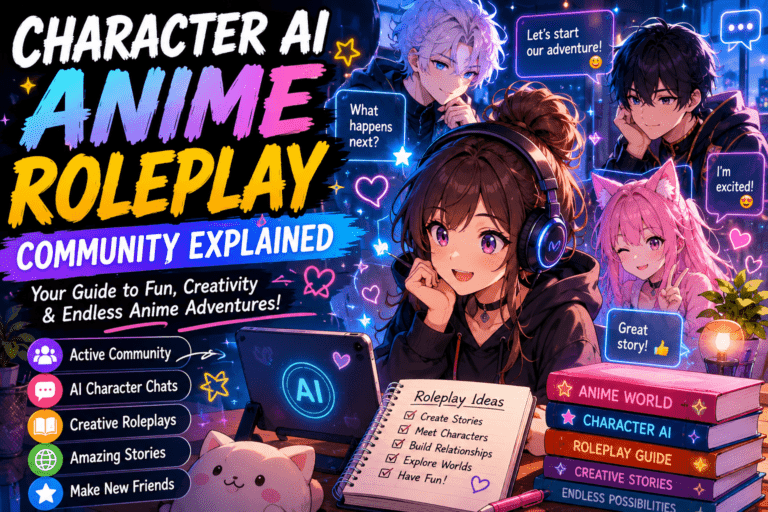
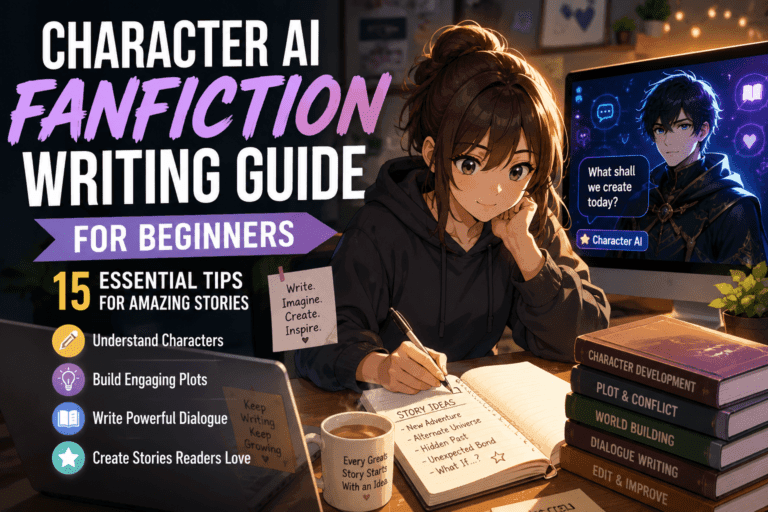
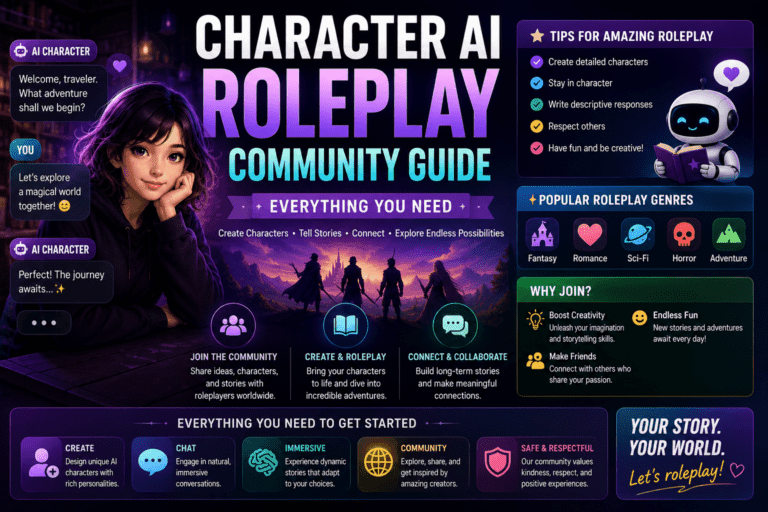
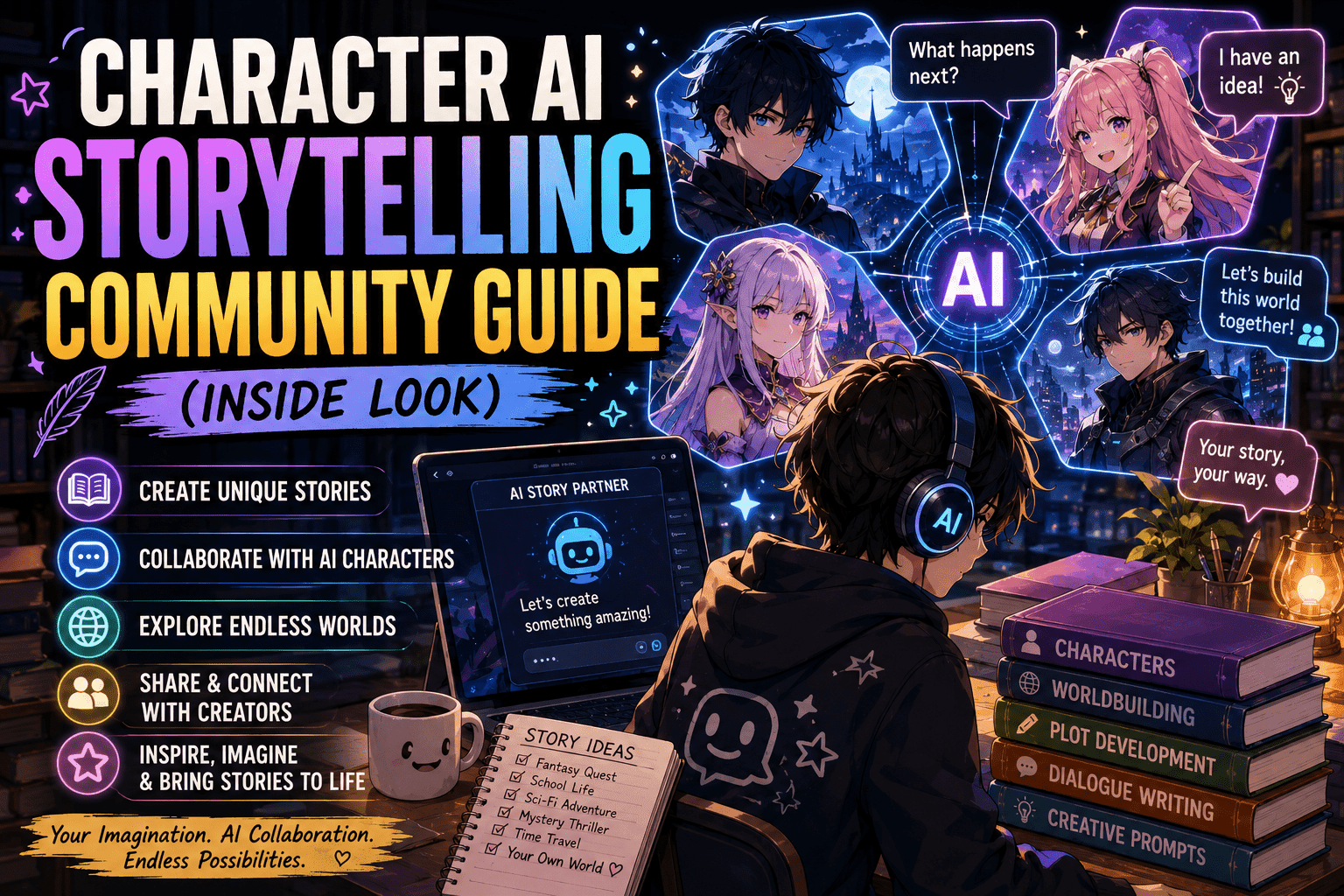
The Character AI storytelling community represents a growing movement where imagination meets technology. Members explore fictional worlds, create compelling characters, and participate in interactive stories that evolve through conversation.
What Is the Character AI Storytelling Community?
The Character AI storytelling community consists of users who create, share, and interact with AI-generated characters for storytelling purposes.
Participants commonly use AI characters to:
- Develop story ideas
- Practice creative writing
- Explore fictional scenarios
- Build roleplay adventures
- Create character-driven narratives
Unlike traditional storytelling platforms, AI communities provide real-time interaction that can influence the direction of a story instantly.
How AI Storytelling Communities Evolved
Early Online Storytelling Platforms
Before AI became widely available, online storytelling primarily took place through:
- Writing forums
- Fanfiction communities
- Collaborative storytelling websites
- Roleplaying groups
- Creative writing clubs
These communities relied entirely on human participation.
The Emergence of AI-Powered Narratives
Advances in natural language processing transformed storytelling by introducing intelligent conversational characters. Writers could suddenly brainstorm ideas, test dialogue, and build narratives with AI companions capable of responding creatively to story developments.
This innovation helped attract both experienced writers and complete beginners.
Why Storytellers Join Character AI Communities
Creative Freedom
One of the biggest attractions is creative freedom.
Writers can:
- Experiment with genres
- Explore alternate storylines
- Create original characters
- Test unusual ideas
- Build expansive fictional worlds
There are few limitations compared to traditional publishing environments.
Collaborative Story Development
AI storytelling feels collaborative because the narrative often develops through interaction.
Unexpected responses can:
- Inspire plot twists
- Reveal new character traits
- Create conflicts
- Introduce surprising solutions
This unpredictability keeps storytelling fresh and engaging.
Popular Storytelling Formats
Roleplay Stories
Roleplay remains one of the most popular formats.
Examples include:
- Fantasy adventures
- School-life stories
- Science fiction missions
- Historical narratives
- Superhero adventures
Interactive Adventures
Interactive stories allow readers or participants to influence outcomes through decisions.
These stories often include:
- Branching paths
- Multiple endings
- Dynamic character relationships
- Evolving storylines
Character-Driven Narratives
Some writers focus heavily on character development rather than action.
Character-driven stories explore:
- Emotional growth
- Relationships
- Personal struggles
- Internal conflicts
These narratives often create strong emotional connections with readers.
Creating Engaging Characters
Strong characters are the foundation of successful storytelling.
Personality Design
Well-designed characters typically include:
| Element | Purpose |
|---|---|
| Goals | Provide motivation |
| Strengths | Create competence |
| Weaknesses | Add realism |
| Values | Guide decisions |
| Fears | Generate conflict |
A balanced character feels believable and relatable.
Character Consistency
Consistency helps maintain immersion.
When developing characters:
- Keep motivations clear
- Maintain speech patterns
- Respect established traits
- Allow realistic growth
Consistency builds trust between writer and reader.
Building Immersive Story Worlds
A compelling world enhances every story.
Consider including:
Setting
Describe:
- Geography
- Architecture
- Climate
- Culture
Rules
Establish:
- Magic systems
- Technology levels
- Social structures
- Political systems
History
Rich backstories create depth and make fictional worlds feel alive.
Writing Effective Story Prompts
Good prompts lead to better stories.
Examples include:
- “A forgotten kingdom suddenly reappears after centuries.”
- “Two rivals must work together to survive.”
- “A mysterious artifact grants unpredictable powers.”
- “An ordinary student discovers a hidden magical society.”
Specific prompts often generate more engaging narratives than vague instructions.
Community Guidelines and Best Practices
Successful storytelling communities thrive on mutual respect.
Helpful practices include:
- Be supportive of other creators.
- Respect platform rules.
- Credit original ideas when appropriate.
- Avoid disruptive behavior.
- Encourage constructive feedback.
Positive interactions strengthen community culture.
Benefits of Participating in Storytelling Communities
Improved Writing Skills
Regular participation can strengthen:
- Dialogue writing
- Character development
- Plot construction
- Descriptive writing
- Creative thinking
Creative Inspiration
Writers often discover new ideas through interactions with AI characters and other community members.
Confidence Building
Sharing stories and receiving feedback helps creators gain confidence in their abilities.
Common Challenges and Solutions
Writer’s Block
Solution:
- Use random prompts
- Explore new genres
- Introduce unexpected conflicts
Character Inconsistency
Solution:
- Maintain character notes
- Create personality profiles
- Review previous interactions
Story Direction Problems
Solution:
- Define goals early
- Outline major plot points
- Focus on character motivations
Future of AI Storytelling Communities
The future of AI storytelling appears exciting.
Expected developments include:
- Longer memory retention
- Improved character realism
- Voice-enabled storytelling
- Visual story integration
- Enhanced collaborative writing tools
These innovations may make interactive storytelling even more immersive and accessible.
For broader information about creative writing techniques, writers often use resources such as Purdue Online Writing Lab.
Frequently Asked Questions
1. What is a Character AI storytelling community?
It is a community where users create, share, and develop stories through interactions with AI-powered characters.
2. Do I need writing experience to join?
No. Beginners are welcome, and many users improve their skills through practice.
3. Can AI help overcome writer’s block?
Yes. AI can generate ideas, dialogue, scenarios, and prompts that inspire new story directions.
4. What genres are most popular?
Fantasy, science fiction, romance, adventure, mystery, and slice-of-life stories are among the most popular.
5. Can I create original characters?
Absolutely. Many creators build entirely original characters and worlds.
6. Is AI storytelling suitable for serious writers?
Yes. Many writers use AI as a brainstorming and creative development tool alongside traditional writing methods.
Conclusion
The Character AI Storytelling Community Guide (Inside Look) reveals why these communities continue to grow rapidly among writers, roleplayers, and creative enthusiasts. By combining imagination with interactive AI technology, creators can develop richer characters, explore new worlds, and build engaging stories in ways that were previously impossible.
Whether you’re a beginner seeking inspiration or an experienced writer looking for fresh creative opportunities, AI storytelling communities offer a unique space to learn, experiment, and share unforgettable narratives with others.