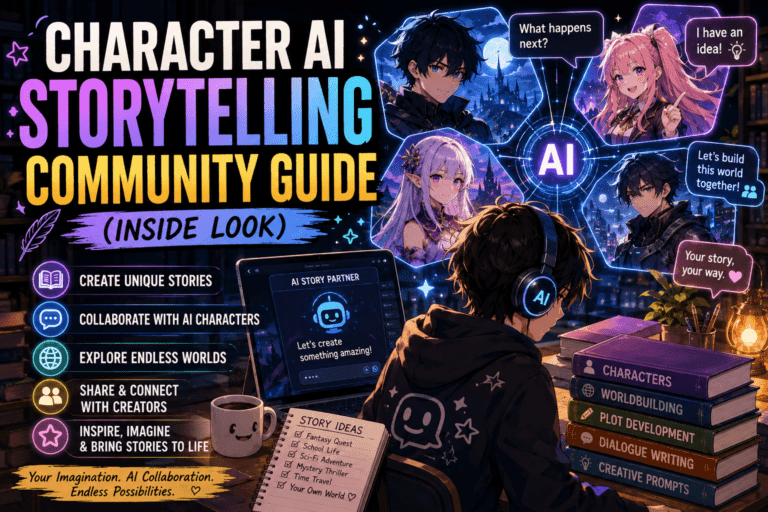


Character AI Personality Framework
What Is a Character AI Personality Framework?
The Character AI Character Personality Framework is a structured approach to designing AI characters with consistent, realistic, and engaging personalities. It defines how an AI behaves, speaks, reacts, and evolves over time.
Character AI: What It Is, How It Works, and Why Millions Use It (Complete Guide)
Instead of creating random or generic responses, this framework ensures that an AI character feels like a real individual with unique traits, preferences, and emotional responses.
At its core, the framework acts like a blueprint. It guides how the AI thinks, communicates, and interacts with users across different scenarios.
Why Personality Design Matters in AI
Without a defined personality, AI feels robotic and inconsistent. Users quickly lose interest if interactions lack depth or coherence.
A well-designed personality framework provides:
- Consistency in responses
- Emotional engagement
- Realistic interactions
- Strong user connection
In gaming, storytelling, and conversational AI, personality is what transforms a tool into an experience.
Foundations of AI Character Personality
Core Personality Traits
Every AI character begins with a set of core traits. These define who the character is at a fundamental level.
Examples include:
- Friendly vs. serious
- Logical vs. emotional
- Introverted vs. extroverted
These traits influence all interactions and must remain consistent.
Behavioral Patterns
Behavioral patterns determine how a character acts in different situations. For example:
- Does the character respond quickly or thoughtfully?
- Are they humorous or formal?
- Do they take initiative or wait for prompts?
These patterns create predictability, which makes the AI feel more human.
Emotional Intelligence in AI
Emotional intelligence allows AI to understand and respond to user emotions. This includes:
- Recognizing tone
- Adjusting responses
- Showing empathy
This layer is critical for creating meaningful interactions.
The Structure of a Character AI Personality Framework
Identity Layer
The identity layer defines the character’s basic profile:
- Name
- Age (real or fictional)
- Occupation or role
- Background
This layer answers the question: Who is this character?
Behavior Layer
This layer governs how the character acts. It includes:
- Habits
- Reactions
- Decision-making style
Communication Layer
This defines how the character speaks:
- Tone (formal, casual, witty)
- Vocabulary
- Sentence structure
Memory Layer
Memory ensures continuity. It allows the AI to:
- Recall past interactions
- Maintain personality consistency
- Adapt over time
Defining Character Backstory
Importance of Backstory
A strong backstory adds depth and realism. It explains why a character behaves a certain way.
For example, a character with a scientific background may use technical language, while a storyteller may use descriptive and emotional language.
Creating Consistent Histories
To maintain consistency:
- Define key life events
- Establish motivations
- Avoid contradictions
A well-crafted backstory makes the character believable.
Personality Trait Modeling
Big Five Personality Traits in AI
The Big Five model is widely used in personality design:
- Openness
- Conscientiousness
- Extraversion
- Agreeableness
- Neuroticism
By assigning values to these traits, developers can create nuanced personalities.
Archetypes and Role-Based Personalities
Archetypes simplify personality creation. Examples include:
- The Mentor
- The Hero
- The Trickster
These provide a foundation that can be customized further.
Tone and Voice Design
Language Style
Language style defines how the character communicates:
- Simple vs. complex sentences
- Formal vs. casual tone
- Use of humor or slang
Dialogue Patterns
Patterns include:
- Asking questions
- Providing explanations
- Using storytelling
These patterns shape interaction flow.
Emotional and Psychological Depth
Emotional Range
A well-designed AI character should express a range of emotions:
- Happiness
- Frustration
- Curiosity
This adds realism and engagement.
Reaction Systems
Reaction systems determine how the AI responds to different inputs.
For example:
- Positive feedback → encouragement
- Negative feedback → empathy
Decision-Making Logic
Rule-Based Systems
These systems use predefined rules to guide behavior. They ensure consistency but can be limited.
Contextual Decision Models
More advanced systems consider context, allowing for flexible and adaptive responses.
Memory and Context Awareness
Short-Term Memory
This allows the AI to remember recent interactions and maintain conversation flow.
Long-Term Personality Consistency
Long-term memory ensures that the character remains consistent over time.
Customization for Different Use Cases
Gaming Characters
In games, personality enhances immersion. Characters must react dynamically to player actions.
Chatbots and Assistants
For business use, personality improves user engagement and trust.
Storytelling AI
In storytelling, personality drives narrative depth and emotional impact.
Tools and Techniques for Building AI Personalities
Prompt Engineering
Carefully crafted prompts define how the AI behaves and responds.
Personality Templates
Templates provide a structured starting point for character creation.
Common Mistakes in AI Personality Design
Inconsistency
Changing behavior or tone can break immersion.
Overcomplication
Too many traits can make the character unpredictable.
Advanced Character Personality Techniques
Dynamic Personality Evolution
AI characters can evolve based on interactions, becoming more personalized over time.
Multi-Personality Systems
Some systems allow multiple personalities within a single AI, switching based on context.
Future of Character AI Personality Framework
AI Emotional Intelligence
Future AI will better understand and respond to human emotions.
Hyper-Personalized AI Characters
AI will adapt to individual users, creating unique experiences.
FAQs
1. What is a Character AI personality framework?
It’s a structured system for designing consistent and realistic AI personalities.
2. Why is personality important in AI?
It improves engagement, realism, and user experience.
3. Can AI personalities evolve over time?
Yes, advanced systems allow dynamic personality changes.
4. What are the key components of the framework?
Identity, behavior, communication, and memory.
5. How do you create a realistic AI character?
By combining traits, backstory, and consistent behavior.
6. Is emotional intelligence important in AI?
Yes, it makes interactions more human-like and engaging.
Conclusion
The Character AI Character Personality Framework is essential for creating engaging, realistic, and effective AI characters. By combining structured design with creativity, developers can build personalities that feel authentic and dynamic.
As AI continues to evolve, personality frameworks will play a crucial role in shaping how humans interact with machines. Whether for gaming, business, or storytelling, mastering this framework unlocks the full potential of AI-driven experiences.