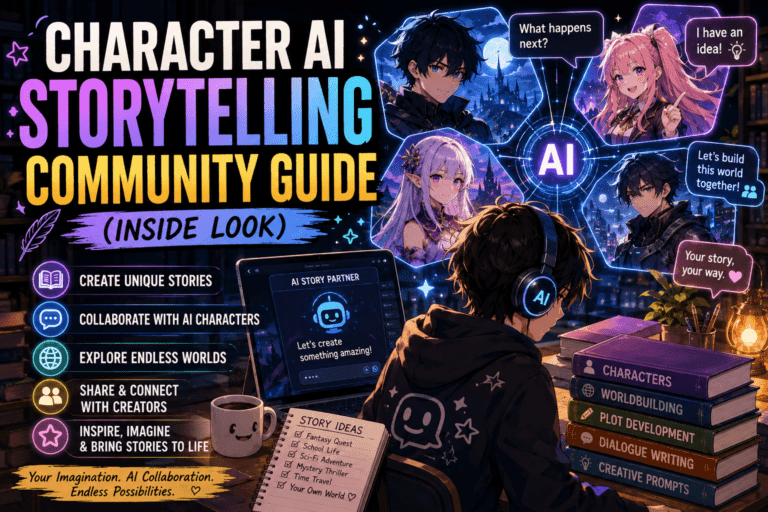


Character AI Roleplay
What is Character AI Roleplay?
The Character AI Roleplay Story Building Guide begins with understanding what roleplay truly means in the AI era. Character AI roleplay is a creative process where users interact with artificial intelligence to simulate conversations, narratives, and story-driven experiences. Unlike traditional storytelling, AI roleplay allows dynamic, real-time responses that evolve based on user input.
Character AI: What It Is, How It Works, and Why Millions Use It (Complete Guide)
In simple terms, you’re not just writing a story—you’re living inside it.
Why AI Roleplay is Gaining Popularity
AI roleplay has exploded in popularity because it blends creativity with interactivity. People enjoy:
- Instant story generation
- Personalized character interactions
- Endless narrative possibilities
- Emotional engagement
It’s like having a co-author who never runs out of ideas.
Understanding Story Building Fundamentals
Core Elements of a Strong Story
Every great roleplay starts with strong storytelling basics. Even with AI, these principles remain essential.
Plot, Characters, and Setting
A compelling story needs three pillars:
- Plot: The sequence of events
- Characters: The driving force of the story
- Setting: The world where everything unfolds
Without these, your roleplay can feel directionless.
Conflict and Resolution
Conflict is the heart of any story. Whether it’s internal struggles or external battles, conflict keeps the narrative engaging. Resolution, on the other hand, gives satisfaction and closure.
Getting Started with Character AI
Choosing the Right AI Platform
Before diving into storytelling, selecting the right platform matters. Look for:
- Custom character creation
- Memory retention capabilities
- Flexible dialogue systems
These features help create deeper and more immersive roleplays.
Setting Up Your First Roleplay Scenario
Start simple. Define:
- Who your character is
- Where the story begins
- What the initial goal is
For example:
“A wandering knight enters a cursed forest seeking redemption.”
This single line can spark an entire storyline.
Designing Compelling Characters
Character Backstories
Backstories add depth. A well-crafted character should have:
- Past experiences
- Personal goals
- Emotional triggers
These elements shape how they react in roleplay.
Personality Traits and Motivations
Ask yourself:
- Is your character brave or fearful?
- What do they want most?
- What are they afraid of losing?
Motivation drives action, and action drives story.
Dialogue Style and Voice
Each character should sound unique. Consider:
- Vocabulary
- Tone (formal, casual, sarcastic)
- Speech patterns
This makes interactions feel real.
Building Immersive Worlds
World-Building Basics
A believable world enhances immersion. Define:
- Geography
- Culture
- Rules (magic, technology, politics)
Even small details can make a big difference.
Creating Consistent Lore
Consistency is key. If magic exists, define its limits. If technology is advanced, explain how it affects society.
Inconsistent worlds break immersion quickly.
Crafting Engaging Plotlines
Story Arcs and Structures
Use classic structures like:
- Beginning → Middle → End
- Hero’s Journey
- Three-act structure
These frameworks help guide your narrative.
Using Twists and Cliffhangers
Keep your audience hooked by:
- Introducing unexpected events
- Ending scenes with suspense
- Revealing secrets gradually
This keeps the roleplay exciting.
Roleplay Techniques for Realism
Staying in Character
Consistency in behavior is crucial. Avoid:
- Sudden personality changes
- Unrealistic reactions
Stay true to your character’s identity.
Managing Multiple Characters
If you control multiple characters:
- Give each a distinct voice
- Avoid blending personalities
- Keep track of relationships
Advanced AI Prompting Strategies
Writing Effective Prompts
Good prompts lead to better responses. Use:
- Clear instructions
- Emotional context
- Specific actions
Example:
“Respond as a tired warrior who has lost faith in humanity.”
Controlling AI Behavior
Guide AI by:
- Reinforcing tone
- Correcting inconsistencies
- Providing context regularly
Maintaining Story Consistency
Avoiding Plot Holes
Track:
- Character decisions
- Timeline of events
- World rules
Even AI can lose track, so you must guide it.
Tracking Story Progress
Keep notes of:
- Major events
- Character arcs
- Important dialogue
This ensures continuity.
Enhancing Emotional Depth
Building Emotional Connections
Make readers feel something:
- Show vulnerability
- Create meaningful relationships
- Use emotional stakes
Using Dialogue for Impact
Dialogue should:
- Reveal character traits
- Advance the plot
- Convey emotions
Avoid filler conversations.
Common Mistakes to Avoid
Overcomplicating the Story
Too many plotlines can confuse both you and the AI. Keep it manageable.
Ignoring Character Development
Characters should evolve. Static characters make stories boring.
Tips for Long-Term Roleplay Success
Keeping Stories Fresh
Introduce:
- New conflicts
- New characters
- Unexpected changes
Collaborating with Others
Working with other roleplayers can:
- Add diversity
- Increase creativity
- Make stories more dynamic
Tools and Resources for Roleplay Writers
Writing Tools and AI Assistants
Helpful tools include:
- AI chat platforms
- Note-taking apps
- Story planners
Community Platforms
Join communities to:
- Share ideas
- Get feedback
- Find collaborators
For more storytelling techniques, you can explore this helpful resource:
Creative Writing Guide
FAQs
1. What is the best way to start AI roleplay?
Start with a simple scenario and build gradually. Focus on one character and one goal.
2. How do I make my roleplay more realistic?
Stay consistent with character behavior, use detailed descriptions, and maintain logical story progression.
3. Can AI remember long stories?
Some platforms have memory limits, so it’s important to summarize and remind the AI of key details.
4. How do I avoid repetitive AI responses?
Use varied prompts and guide the AI with fresh context and instructions.
5. What makes a good roleplay character?
Depth, motivation, flaws, and a unique voice make characters compelling.
6. How long should a roleplay story be?
There’s no fixed length. It can be short or ongoing, depending on your goals.
Conclusion
The Character AI Roleplay Story Building Guide shows that creating immersive stories with AI is both an art and a skill. By combining strong storytelling fundamentals with smart AI prompting, you can craft experiences that feel alive and engaging.
Whether you’re a beginner or an experienced writer, the key is to stay creative, consistent, and curious. The possibilities are endless—and your next great story is just one prompt away.