
Introduction
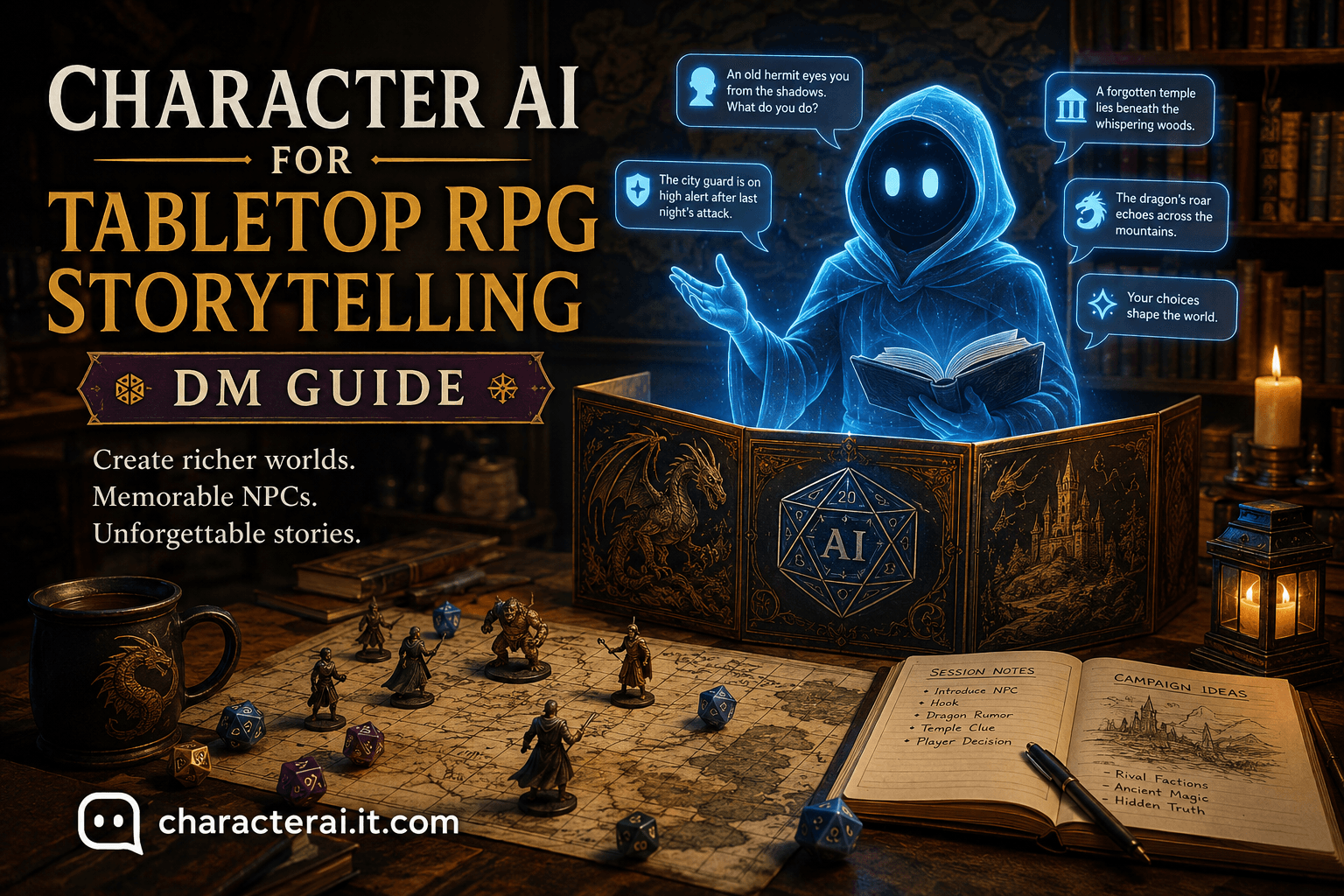
Tabletop RPGs thrive on imagination, improvisation, and storytelling. But even the most experienced Dungeon Master (DM) eventually runs into creative fatigue. That’s where Character AI comes in.
Character AI tools can generate dialogue, simulate personalities, and help you create living, breathing NPCs in seconds. Used correctly, they don’t replace your storytelling—they amplify it.
This guide breaks down exactly how to use Character AI for tabletop RPG storytelling, whether you run Dungeons & Dragons, Pathfinder, or any custom system.
Character AI: What It Is, How It Works, and Why Millions Use It (Complete Guide)
What Is Character AI in RPG Context?
Character AI refers to AI systems designed to simulate personalities, dialogue, and behavior of fictional characters.
In tabletop RPGs, this means:
- Creating realistic NPC conversations
- Generating backstories instantly
- Simulating character reactions
- Improving improvisation during sessions
Instead of pausing your game to think of dialogue, you can lean on AI to keep the story flowing.
Why Dungeon Masters Should Use Character AI
Let’s be honest—being a DM is exhausting.
You’re managing:
- Story arcs
n- Player chaos - World-building
- Combat systems
- Improvised dialogue
Character AI reduces that mental load.
Key Benefits
1. Faster NPC Creation
Generate detailed NPCs in seconds:
- Personality traits
- Motivations
- Secrets
- Dialogue style
2. Real-Time Dialogue Support
If players ask unexpected questions (they will), AI can generate natural responses instantly.
3. Improved Roleplay Quality
AI helps maintain consistent personalities, accents, and speech patterns.
4. Endless Inspiration
Stuck mid-session? AI can suggest plot twists, conflicts, or character reactions.
Best Ways to Use Character AI as a DM
1. Creating Memorable NPCs
Instead of generic shopkeepers, create layered characters.
Example Prompt:
“You are a paranoid black market merchant who secretly works for a hidden cult. Speak cautiously and avoid revealing too much unless pressured.”
Result: Instantly more engaging NPC interaction.
2. Running Conversations Live
Use AI as a “co-DM” during dialogue-heavy scenes.
Tips:
- Keep prompts short and focused
- Define tone and personality clearly
- Filter outputs before speaking
3. Generating Backstories
Need a quick backstory?
Prompt:
“Create a tragic backstory for a disgraced knight who seeks redemption.”
You’ll get usable content in seconds.
4. Simulating Player Interactions
Test scenarios before sessions:
- How NPC reacts to threats
- How secrets are revealed
- Dialogue branching
This helps you prepare without scripting everything.
5. Dynamic Quest Generation
AI can generate:
- Side quests
- Moral dilemmas
- Unexpected twists
No more filler content that feels… well, like filler.
Prompt Engineering for RPG Storytelling
If your prompts are bad, your results will be bad. Shocking, I know.
Structure of a Good Prompt
- Role: Who the character is
- Personality: Traits and tone
- Goal: What they want
- Constraint: What they hide or avoid
Example:
“You are a noble elf diplomat who secretly despises humans. Speak politely but subtly condescending. Avoid revealing your true feelings unless provoked.”
Advanced Prompt Tips
- Use emotional triggers (fear, pride, greed)
- Define speech style (formal, sarcastic, nervous)
- Add hidden motives
Tools You Can Use
Popular Character AI tools for RPG storytelling include:
- Character.AI
- ChatGPT
- Tavern AI
- NovelAI
Each has different strengths in dialogue, creativity, and control.
Managing AI During Live Sessions
Using AI mid-session can go wrong if you’re not careful.
Best Practices
- Never read AI responses blindly
- Keep pacing fast
- Pre-generate key NPCs
- Use AI as support, not replacement
Your players came for you—not a chatbot.
Common Mistakes to Avoid
1. Over-Reliance on AI
If AI is doing everything, you’re not DMing—you’re supervising.
2. Breaking Immersion
Slow responses kill tension. Prepare ahead.
3. Inconsistent Characters
AI can drift. Reinforce personality in prompts.
4. Ignoring Player Agency
AI suggestions should never override player choices.
Example Use Case (Mini Scenario)
Scenario: Players interrogate a captured spy.
Without AI:
- You improvise responses under pressure
With AI:
- You input personality + secrets
- AI generates layered responses
- You adapt them in real time
Result: More tension, better storytelling.
Advanced Techniques
Multi-Character Simulation
Run multiple NPCs with distinct prompts.
Memory Injection
Feed AI past events to maintain continuity.
Voice & Style Consistency
Reuse prompts for recurring characters.
Is Character AI Replacing DMs?
No.
It’s a tool—not a storyteller.
The DM still:
- Controls pacing
- Interprets player actions
- Shapes the narrative
AI just makes the process smoother.
Final Thoughts
Character AI is one of the most powerful tools a modern Dungeon Master can use.
Used properly, it enhances creativity, reduces burnout, and makes your world feel alive.
Used poorly, it turns your game into a slow, awkward chatbot demo.
Choose wisely.