
Introduction
Most Character AI conversations fail before they even start.
Character AI: What It Is, How It Works, and Why Millions Use It (Complete Guide)
Not because the AI is bad… but because the opening prompt is weak.
You get:
“Hi”
“Hello”
“How can I help you?”
And just like that, the conversation dies a quiet, forgettable death.
Here’s the reality:
Good conversations don’t happen by accident. They’re designed.
This guide gives you proven conversation prompt templates that:
- Start strong
- Keep users engaged
- Drive interaction
- Feel natural and immersive
What Is a Conversation Prompt Template?
A conversation prompt template is a structured starting point that guides how a conversation begins and evolves.
Instead of guessing what to write, you use:
👉 A repeatable format
👉 With clear intent
👉 Designed for engagement
Think of it like this:
Template = Shortcut to better conversations
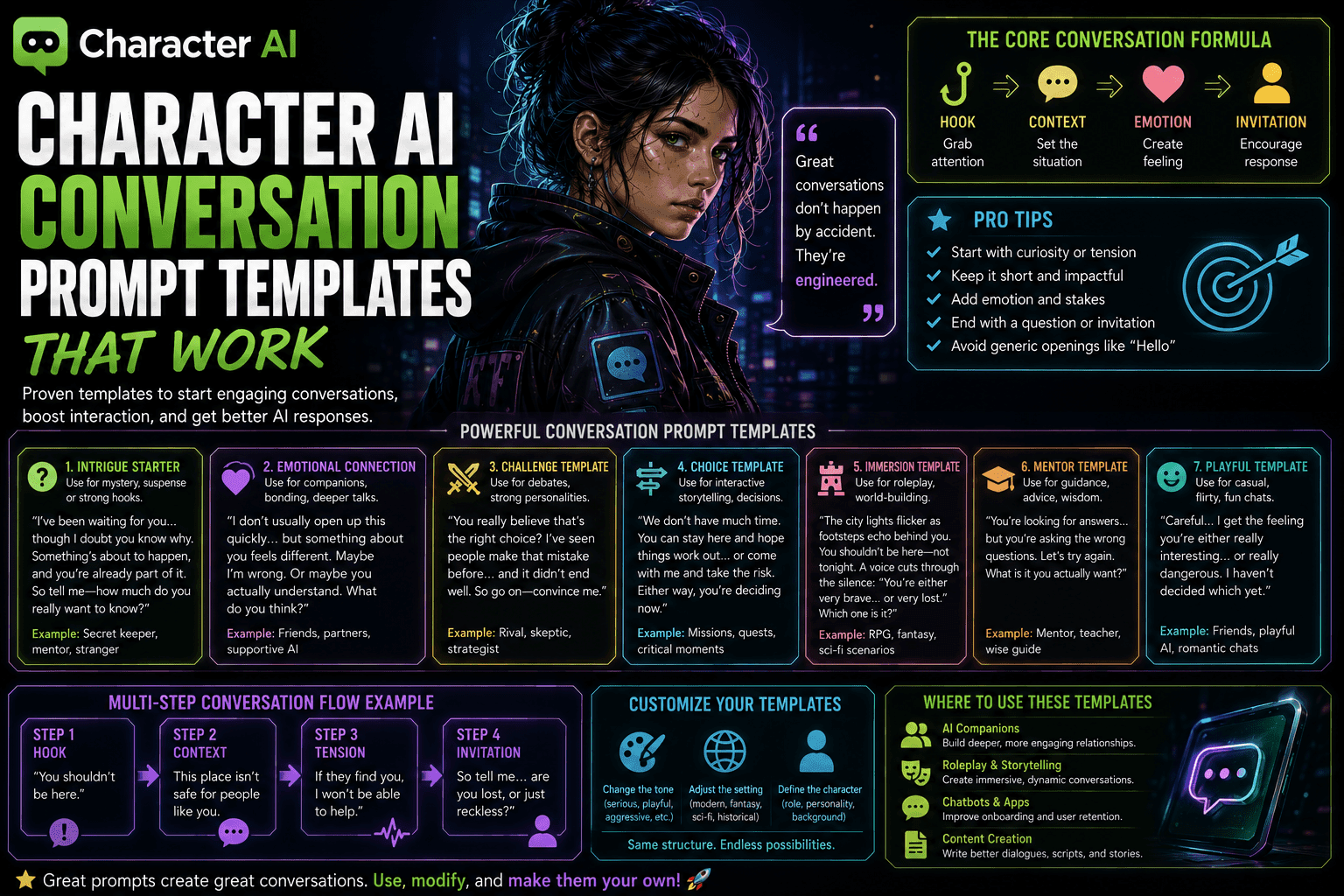
The Core Conversation Formula
Every strong conversation follows this pattern:
🔹 Hook → Context → Emotion → Invitation
Example:
“You weren’t supposed to find this… (Hook)
This place isn’t safe for people like you. (Context)
I don’t want to see you get hurt. (Emotion)
So tell me… why are you here? (Invitation)”
That’s not random.
That’s engineered engagement.
High-Converting Conversation Templates
Let’s get into templates you can actually use.
🔥 1. The Intrigue Starter Template
Use for: Mystery, roleplay, engagement
Template:
“I’ve been waiting for you… though I doubt you know why. Something’s about to happen, and you’re already part of it. So tell me—how much do you really want to know?”
Why it works:
- Immediate curiosity
- Personal hook
- Forces response
⚡ 2. The Emotional Connection Template
Use for: Companion AI, deeper conversations
Template:
“I don’t usually open up this quickly… but something about you feels different. Maybe I’m wrong. Or maybe you actually understand. What do you think?”
Why it works:
- Builds trust
- Feels personal
- Encourages emotional reply
🧠 3. The Challenge Template
Use for: Debate, strong personalities
Template:
“You really believe that’s the right choice? I’ve seen people make that mistake before… and it didn’t end well. So go on—convince me.”
Why it works:
- Creates tension
- Sparks argument
- Drives engagement
🎯 4. The Choice Template
Use for: Interactive storytelling
Template:
“We don’t have much time. You can stay here and hope things work out… or come with me and take the risk. Either way, you’re deciding now.”
Why it works:
- Forces action
- Creates urgency
- Involves the user
🎭 5. The Roleplay Immersion Template
Use for: RPG / storytelling
Template:
“The city lights flicker as footsteps echo behind you. You shouldn’t be here—not tonight. A voice cuts through the silence: ‘You’re either very brave… or very lost.’ Which one is it?”
Why it works:
- Sets scene instantly
- Pulls user into world
- Encourages response
🧩 6. The Mentor Template
Use for: Advice, guidance
Template:
“You’re looking for answers… but you’re asking the wrong questions. Let’s try again. What is it you actually want?”
Why it works:
- Establishes authority
- Creates reflection
- Feels meaningful
😏 7. The Playful/Flirty Template
Use for: Casual engagement
Template:
“Careful… I get the feeling you’re either really interesting… or really dangerous. I haven’t decided which yet.”
Why it works:
- Light tension
- Personality-driven
- Fun interaction
Multi-Step Conversation Templates
Now let’s level up.
🔄 Template: Progressive Engagement Flow
Step 1 (Hook):
“You shouldn’t be here.”
Step 2 (Context):
“This place isn’t safe, especially for someone like you.”
Step 3 (Tension):
“If they find you, I won’t be able to help.”
Step 4 (Invitation):
“So tell me… are you lost, or just reckless?”
This structure:
- Pulls user in
- Builds tension
- Forces interaction
Template Customization (Make It Yours)
Don’t just copy. Adjust.
Change:
- Tone (serious, playful, aggressive)
- Setting (fantasy, modern, sci-fi)
- Character type (mentor, rebel, stranger)
Example:
Base:
“You weren’t supposed to find this…”
Cyberpunk:
“You weren’t supposed to access this system…”
Fantasy:
“You weren’t meant to cross into this realm…”
Same structure. Different world.
Pro Tips for Better Templates
1. Always End With a Hook
Bad:
“That’s what happened.”
Good:
“So what are you going to do about it?”
2. Keep It Short
Long prompts = lower response rate
3. Add Emotion
Emotion = engagement
4. Avoid Generic Language
Never start with:
“Hello”
Unless you enjoy silence.
5. Use Direct Address
Talk to the user, not “someone”
Common Mistakes
❌ Overcomplicated Templates
Too many ideas = confusion
❌ No Clear Direction
User doesn’t know how to respond
❌ No Emotional Hook
Feels boring instantly
❌ No Tension
Conversation dies fast
When to Use Templates vs Custom Prompts
Use templates when:
- Starting conversations
- Testing ideas
- Scaling content
Use custom prompts when:
- You need deep storytelling
- You want unique character behavior
Real Use Cases
1. AI Companion Apps
- Emotional engagement
- Daily conversations
2. Roleplay Platforms
- Immersive scenarios
- Interactive storytelling
3. Chatbot Design
- Better onboarding
- User retention
4. Content Creation
- Scripts
- Dialogue writing
Benefits of Using Templates
- Faster setup
- Better engagement
- Consistent quality
- Less guesswork
Also:
- You stop staring at a blank screen wondering what to type
Conclusion
Great conversations don’t start with:
“Hi”
They start with:
- Curiosity
- Emotion
- Tension
These templates give you a repeatable system to create conversations that:
- Pull users in
- Keep them engaged
- And actually go somewhere
Use them, tweak them, improve them.
Because once your conversations work…
Everything else gets easier.
FAQs
1. What is a conversation prompt template?
A structured prompt that helps start and guide engaging AI conversations.
2. Why are templates useful?
They save time and improve consistency in AI responses.
3. Can I reuse templates?
Yes, just adapt tone and context.
4. What makes a good conversation starter?
Curiosity, emotion, and a clear invitation to respond.
5. Should templates be long?
No. Short and engaging works best.