
Introduction
AI storytelling tools have become essential for writers who want to speed up their workflow, generate better ideas, and improve dialogue quality. But not all AI chatbots are equally effective for storytelling.
Some excel at character interaction, others at long-form writing, and a few try to do everything with mixed results. Choosing the right tool depends on your specific writing needs.
This guide provides a full comparison of the best AI chatbots for storytelling in 2026, breaking down their strengths, weaknesses, and ideal use cases.
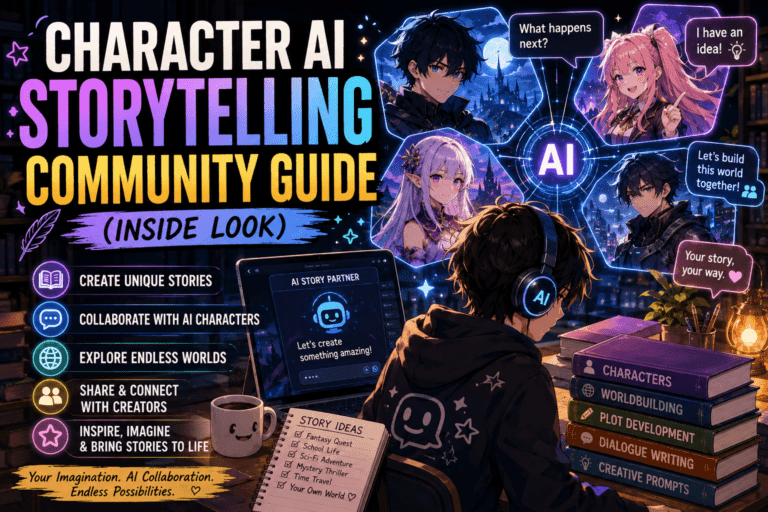
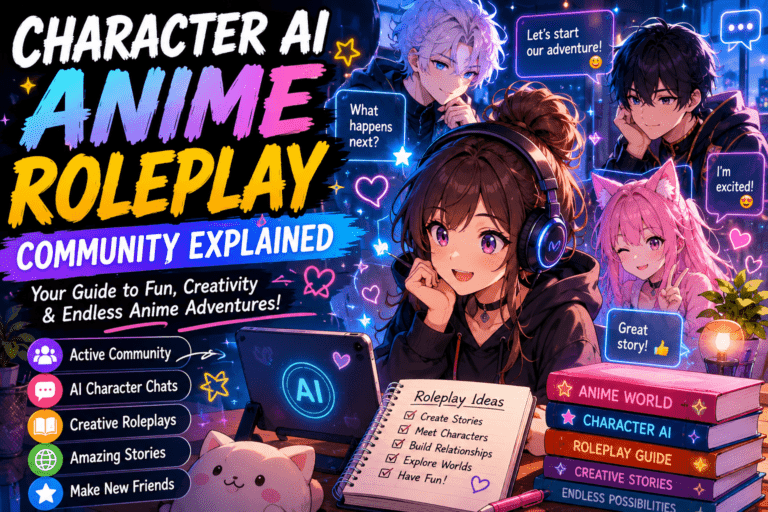
Character AI: What It Is, How It Works, and Why Millions Use It (Complete Guide)
What Makes a Great Storytelling AI
To choose the right tool, you need to evaluate five key factors:
- Memory and context handling
- Creativity and idea generation
- Dialogue realism
- Plot and structure support
- Customization and control
The best storytelling AI tools balance these elements effectively.
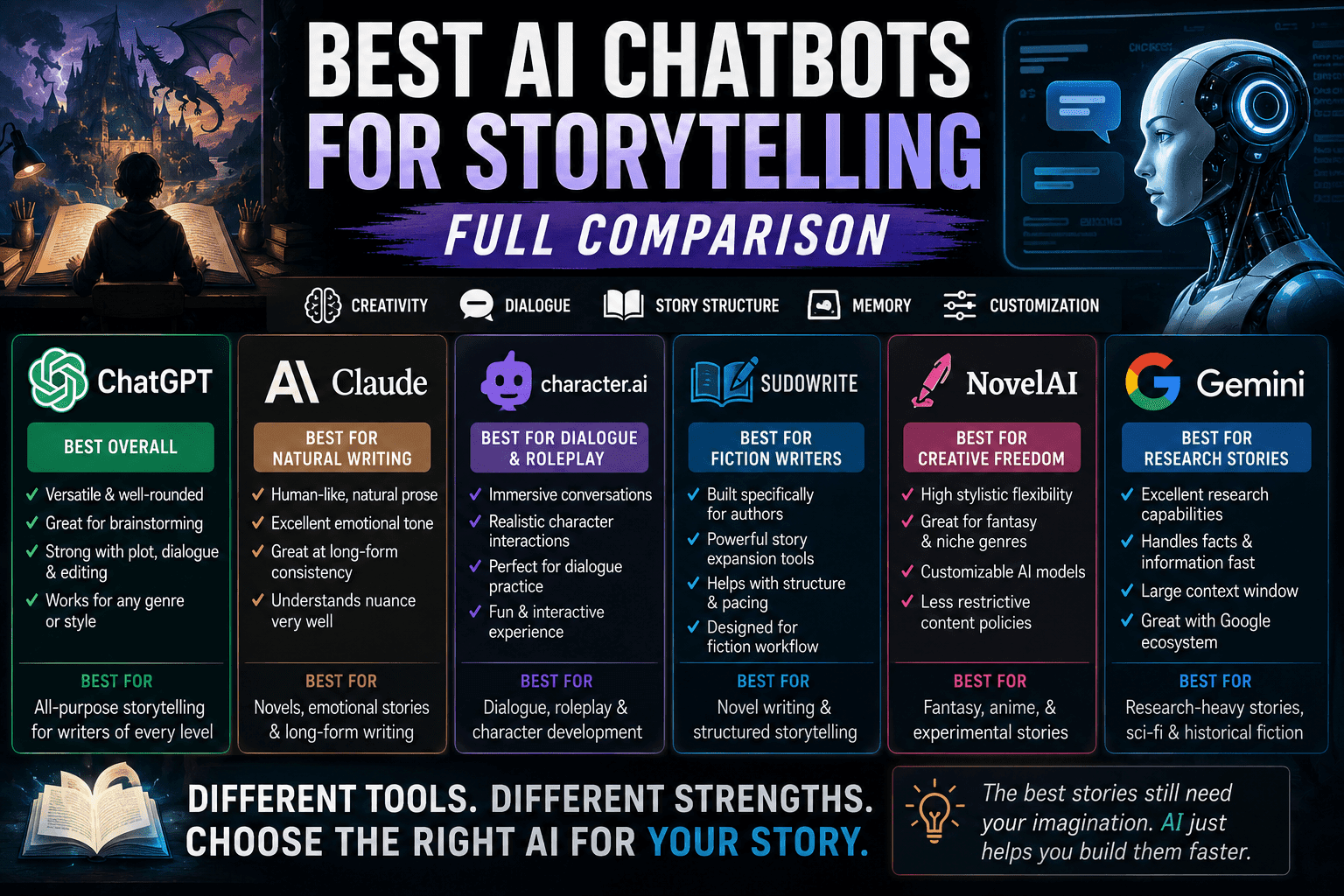
1. ChatGPT — Best Overall AI for Storytelling
Strengths
- Versatile across writing tasks
- Strong brainstorming capabilities
- Good dialogue generation
- Flexible prompt handling
Weaknesses
- Can become repetitive in long sessions
- Requires structured prompts for consistency
Best For
- Full storytelling workflow
- Plot development and dialogue
- Writers of all levels
2. Claude AI — Best for Natural Writing Style
Strengths
- Human-like writing tone
- Strong long-form consistency
- Emotional depth in prose
Weaknesses
- Less dynamic in interactive storytelling
- Sometimes overly cautious
Best For
- Novel writing
- Emotional storytelling
- Long-form content creation
3. Character.AI — Best for Character Interaction
Strengths
- Highly immersive conversations
- Strong character personalities
- Excellent for dialogue practice
Weaknesses
- Weak narrative structure
- Limited control over long plots
Best For
- Roleplay storytelling
- Dialogue improvement
- Character development
4. Sudowrite — Best for Fiction Writers
Strengths
- Built specifically for storytelling
- Scene expansion and rewriting tools
- Strong narrative assistance
Weaknesses
- Paid features required for full access
- Less flexible for non-fiction tasks
Best For
- Novel writers
- Structured storytelling
- Long-form projects
5. NovelAI — Best for Creative Freedom
Strengths
- High creative flexibility
- Strong support for fantasy genres
- Minimal restrictions
Weaknesses
- Requires setup and experience
- Not beginner-friendly
Best For
- Fantasy and creative storytelling
- Experimental writing
- Roleplay scenarios
6. Gemini — Best for Research-Based Storytelling
Strengths
- Strong research capabilities
- Fast data processing
- Large context support
Weaknesses
- Less emotional dialogue
- Limited immersion
Best For
- Sci-fi and historical writing
- Research-heavy projects
- Structured outlines
Full Comparison Table
| Tool | Best Strength | Best Use Case | Weakness |
|---|---|---|---|
| ChatGPT | Versatility | All-purpose storytelling | Repetition |
| Claude AI | Natural writing | Long-form fiction | Less dynamic |
| Character.AI | Dialogue | Roleplay & interaction | Weak structure |
| Sudowrite | Fiction tools | Novel writing | Paid features |
| NovelAI | Creative freedom | Fantasy writing | Learning curve |
| Gemini | Research | Info-heavy stories | Less emotional |
Final Thoughts
There is no single perfect AI storytelling tool. Each platform excels in different areas, and the best results often come from combining multiple tools.
Writers who understand how to use AI strategically can significantly improve productivity, creativity, and storytelling quality.