
Introduction
AI roleplay tools have rapidly evolved into powerful platforms for immersive storytelling, character interaction, and creative exploration. Whether you’re a writer, gamer, or content creator, these tools allow you to simulate conversations, build fictional worlds, and engage with dynamic AI characters.
However, not all roleplay tools are created equal. Some excel in realism, others in customization, and a few focus on emotional depth or storytelling structure.
This honest review compares the best AI roleplay tools in 2026, helping you choose the right platform based on your needs.
Character AI: What It Is, How It Works, and Why Millions Use It (Complete Guide)
What Makes a Great AI Roleplay Tool?
To evaluate roleplay tools effectively, focus on these key factors:
- Character memory and consistency
- Dialogue realism and emotional depth
- Customization and control
- Story continuity
- Ease of use
The best platforms balance these elements for a smooth, immersive experience.
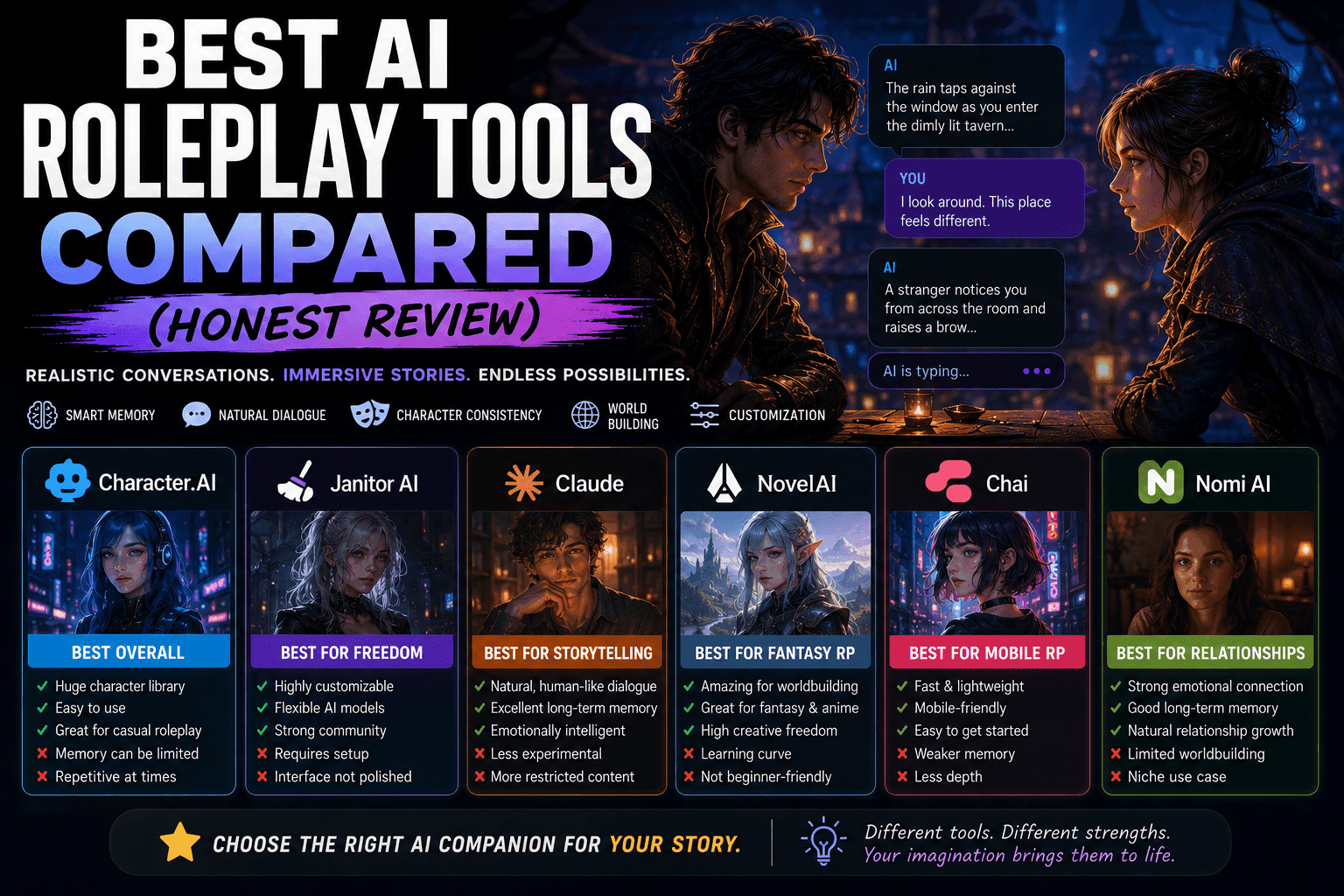
1. Character.AI — Best Overall Roleplay Tool
Strengths
- Highly immersive conversations
- Massive character library
- Easy to use
- Strong personality simulation
Weaknesses
- Limited long-term memory
- Can become repetitive
Best For
- Beginners
- Casual roleplay
- Dialogue practice
2. Janitor AI — Best for Customization
Strengths
- High flexibility
- Custom character creation
- Less restrictive environment
Weaknesses
- Requires setup knowledge
- Interface can be complex
Best For
- Advanced users
- Custom roleplay scenarios
- Creative storytelling
3. Claude AI — Best for Emotional Roleplay
Strengths
- Natural conversation tone
- Strong emotional depth
- Good long-form coherence
Weaknesses
- Less dynamic personality
- More controlled responses
Best For
- Story-driven roleplay
- Emotional interactions
- Narrative writing
4. NovelAI — Best for Fantasy Roleplay
Strengths
- Excellent worldbuilding tools
- Strong stylistic flexibility
- Good for long-form storytelling
Weaknesses
- Learning curve
- Paid features required
Best For
- Fantasy and anime roleplay
- Worldbuilding
- Creative writing
5. Chai AI — Best for Mobile Roleplay
Strengths
- Fast conversations
- Mobile-friendly
- Easy to access
Weaknesses
- Limited depth
- Weak memory
Best For
- Casual chatting
- Quick roleplay sessions
6. Nomi AI — Best for Relationship-Based Roleplay
Strengths
- Strong emotional continuity
- Relationship progression
- Consistent interactions
Weaknesses
- Limited storytelling scope
- Less suitable for complex plots
Best For
- Companion-style roleplay
- Emotional storytelling
Comparison Table
| Tool | Best Feature | Best Use Case | Weakness |
|---|---|---|---|
| Character.AI | Immersion | Casual roleplay | Memory limits |
| Janitor AI | Customization | Advanced roleplay | Setup complexity |
| Claude AI | Emotional depth | Narrative roleplay | Less dynamic |
| NovelAI | Worldbuilding | Fantasy roleplay | Learning curve |
| Chai AI | Speed | Mobile roleplay | Limited depth |
| Nomi AI | Emotional continuity | Relationship RP | Limited scope |
Final Thoughts
The best AI roleplay tool depends on your goals. Some prioritize immersion, others flexibility or emotional depth.
For most users, combining tools leads to the best results — using one for dialogue, another for structure, and another for worldbuilding.
AI roleplay is not about replacing creativity, but enhancing it.
FAQs
1. What is the best AI roleplay tool?
Character.AI is the best overall for most users.
2. Which tool has the best customization?
Janitor AI offers the most flexibility.
3. Which AI is best for emotional storytelling?
Claude AI and Nomi AI perform best in emotional interactions.
4. What is the best tool for fantasy roleplay?
NovelAI is ideal for fantasy and worldbuilding.
5. Are AI roleplay tools free?
Many offer free versions, but advanced features are often paid.