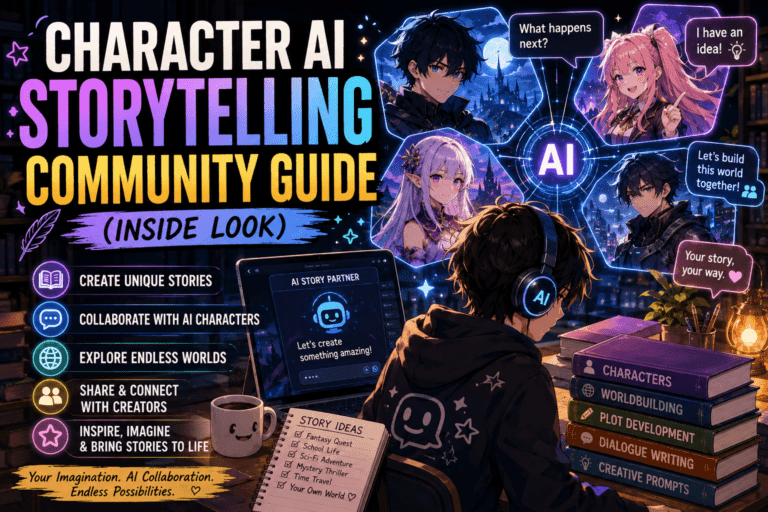


Beginner roleplay is fun.
Advanced roleplay is where things get… interesting.
This is the point where you stop “talking to an AI” and start co-creating a story that actually feels alive.
But getting there requires more than basic prompts.
Character AI: What It Is, How It Works, and Why Millions Use It (Complete Guide)
You need control.
You need structure.
And you need to stop expecting the AI to do all the work.
Let’s level this up properly.
What Makes Roleplay “Advanced”?
Advanced roleplay focuses on:
- Narrative control
- Character consistency
- Emotional realism
- Long-term coherence
It’s not about longer messages—it’s about smarter interaction.
Core Advanced Techniques
1. Narrative Steering
Instead of reacting, guide the story.
How to Do It
- Introduce events
- Add conflict
- Control pacing
Example
“The lights suddenly go out, and footsteps echo behind us.”
You’re not waiting—you’re directing.
2. Layered Prompts
Use multiple layers of instruction.
Structure
- System prompt (rules)
- Scenario prompt (context)
- User input (interaction)
This keeps the AI aligned across conversations.
3. Memory Reinforcement
AI forgets. You remind.
Techniques
- Reintroduce key details
- Summarize events
- Reference past actions
Example
“Remember, we’re tracking the same suspect from earlier.”
4. Emotional Depth
Basic roleplay = actions.
Advanced roleplay = emotions.
Add Depth
- Show internal thoughts
- Express reactions
- Build tension
Example
“I hesitate before opening the door, something feels wrong.”
5. Dialogue + Action Balance
Avoid pure dialogue.
Combine
- Speech
- Actions
- Descriptions
Example
“I glance at you. ‘This doesn’t look good.’ I tighten my grip on the flashlight.”
6. Dynamic Character Behavior
Characters should evolve.
Methods
- Change tone based on events
- Adapt personality slightly
- Show growth
7. Conflict and Stakes
No conflict = boring story.
Add
- Obstacles
- Risks
- Consequences
Advanced Prompt Example
“You are a seasoned detective in a dystopian city.
Rules:
- Stay in character
- Maintain a serious tone
Context:
We are investigating a missing person case tied to a larger conspiracy.
Interaction Style:
- Build tension
- Ask questions
- Advance the story
Always remain immersive and consistent.”
Managing Long Roleplay Sessions
1. Summarize Key Events
Keep track of the story.
2. Reinforce Context
Remind the AI of important details.
3. Maintain Tone
Consistency over time matters.
Advanced Interaction Techniques
1. Open-Ended Prompts
Encourage richer responses.
2. Controlled Ambiguity
Leave room for creativity.
3. Strategic Corrections
Guide without breaking immersion.
Common Advanced Mistakes
- Over-controlling the AI
- Ignoring pacing
- Losing character consistency
Best Practices
1. Balance Control and Freedom
2. Focus on Story, Not Just Dialogue
3. Keep Characters Consistent
4. Iterate and Adapt
Use Cases
- Interactive storytelling
- Game development
- Creative writing
Advantages
- Deep immersion
- Rich narratives
- Engaging experiences
Limitations
- Requires effort
- Needs active guidance
FAQs
1. What makes roleplay advanced?
Narrative control and emotional depth.
2. How do I maintain consistency?
Use memory reinforcement and rules.
3. Can AI handle long stories?
Yes, with proper management.
4. Should I control everything?
No, balance is key.
5. How do I improve immersion?
Add emotion, context, and variation.
Conclusion
Advanced AI roleplay is not about complexity.
It’s about control, consistency, and creativity.
If you guide the narrative, reinforce context, and add emotional depth, your roleplay will feel far more immersive.
And instead of short-lived interactions, you’ll create stories that actually stick.